A bottle of tahini was something I always saw at home growing up… at the time, it really wasn’t popular the way it is now. As a child of immigrant Egyptian and Syrian parents, I quickly came to understand that this was a kitchen essential—very much like the bottle of olive oil or the jar of zaatar.
And now, smooth shades of beige have never been so sought after. Will you look at that.
Walk into any health food store today—from Paris to Los Angeles—and you’ll likely find shelves lined with jars of tahini. What was once a quiet staple of Middle Eastern and Eastern Mediterranean kitchens has now become a global pantry essential, embraced by chefs, nutritionists, and home cooks alike. Much of this rise can be attributed to the growing popularity of Middle Eastern cuisine worldwide.
Hummus, which travelled through the migration of the Middle Eastern diaspora, carried tahini with it—and the industrialization of supermarket hummus only accelerated that movement. At the same time, celebrity chef culture helped propel tahini further into the spotlight. If there is one culinary duo who elevated tahini in a modern, global, and aesthetic way, it would be Yotam Ottolenghi and Sami Tamimi.
Add to that the health food movement—particularly in the United States between the 1940s and 1970s—when tahini began appearing in natural food stores and among vegetarian and vegan communities. Rich in fats, minerals, and protein, it naturally found its place there, earning a reputation as a delicious and versatile “health food”—much like what we’ve seen happen with dates.
The danger, however, is that when a traditional ingredient becomes a superfood, we often lose part of its cultural story. It’s something I find myself noticing again and again—but that, perhaps, is a story for another day.
Now—
Before going further, it’s worth clarifying that this article focuses on Middle Eastern tahini—the silky, pourable paste made from lightly roasted sesame seeds. It is distinct from East Asian sesame pastes, particularly those used in Chinese and Japanese cuisines, which are typically darker, more roasted, thicker, and often more bitter.
What Does “Tahini” Actually Mean?
I really want to touch on this because, sadly, I am even guilty of using the incorrect pronunciation when speaking to a non-Arabic audience. I admit I say “tahini” because I assume it will be better understood. But tahini is not really pronounced that way—in fact, what we are using is an Americanized adaptation closer to the Greek word for the same food.
The word tahini comes from the Arabic root ṭ-ḥ-n (طحن), meaning “to grind.” In Arabic, ṭaḥīna (طحينة) simply means “that which is ground”—a reference both to the sesame paste itself and to the act of grinding.
So yes, the word as commonly used today is slightly Westernized. In Arabic, it is pronounced closer to tahina or tahin’eh, while in modern Greek, the word tachini (ταχίνι) reflects its own adaptation of the same root. The spelling seen on most jars in the West aligns more closely with the Greek form than the Arabic one—an example of how ingredients travel across cultures, carrying their names with them, reshaped along the way.¹
A History Written in Seeds
To understand tahini, we must begin with the almighty sesame.
Sesame is one of the oldest cultivated crops in the world, with archaeological evidence tracing its domestication back over 3,000 years, likely in the Indian subcontinent and parts of East Africa. From there, it spread along trade routes into Mesopotamia, the Levant, and the broader Middle East.²

Tahini itself appears in written culinary history as early as the 13th century, in medieval Arabic cookbooks from the Abbasid period, such as Kitāb al-Ṭabīkh (The Book of Dishes), compiled in Baghdad. These texts describe sauces made from ground sesame, often combined with vinegar or citrus—early ancestors of the tahini sauces we recognize today.³ Pictured above: Two pages from the ms of Kitab al-tabikh in the National Library of Finland .
There is also a frequently repeated claim that Aristotle wrote about sesame preparations resembling tahini. While sesame was certainly known and valued in the ancient Mediterranean world, direct references to tahini as we understand it today remain difficult to verify. What is clear, however, is that sesame—and sesame-based foods—were prized for both their nutritional and medicinal qualities in ancient societies.⁴
Where Does Tahini “Come From”?
Like many deeply rooted ingredients, tahini does not belong neatly to one country. It belongs to a region, to a climate, to a way of eating.
Lebanon, Palestine, Iran, Iraq, Syria, Jordan, Turkey, Greece and Egypt all claim tahini as part of their culinary identity—and rightly so. The technique of grinding sesame into paste likely evolved across multiple regions where sesame was cultivated and consumed.
Interestingly, tahini never became central to Maghrebi cuisines—reminding us that North Africa has its own distinct culinary identity. Too often, people imagine a single “Middle Eastern” culinary umbrella stretching from the Maghreb to Iran, when in reality these regions are deeply diverse.
So rather than asking who invented tahini, a more meaningful question might be: where did tahini become essential?
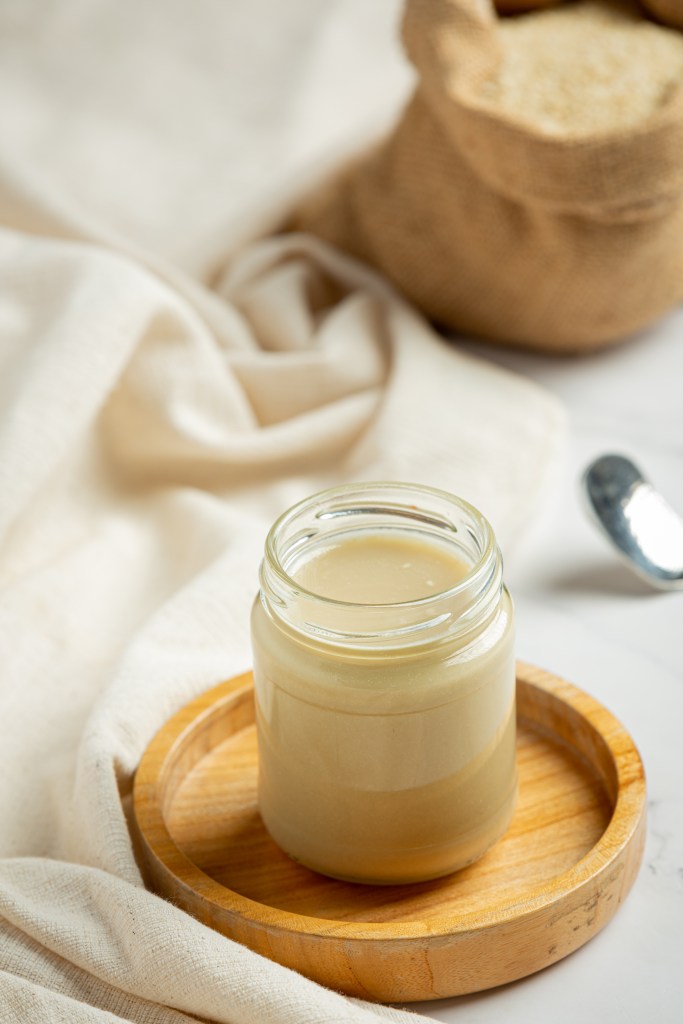
Across the Eastern Mediterranean and Middle East, tahini forms the backbone of dishes such as hummus, baba ghanoush, tarator, and halva. In Palestine, it is thinned into tarator and served with fish or roasted vegetables. In Syria, it appears in dishes like tisiyeh, layered with crispy bread, yogurt, various nuts and chickpeas. In Iraq, it is used in both savory sauces and sweets, often paired with date molasses. In Greece, it is blended with honey or used during fasting periods in dishes like tahini soup. In Lebanon, it is used in the seasonal kibbeh arnabieh, which incorporates various types of citrus fruits with tahini. In Turkey, it is famously paired with grape molasses (tahin-pekmez), eaten at breakfast as both nourishment and comfort. In Iran, sesame paste appears in sweets such as halva-ye ardeh, where it is combined with sugar or date syrup into dense, energy-rich confections. And of course, many of these mentioned recipes are also found in the other respective countries.
What emerges is not a single tradition, but a shared language—one ingredient, spoken differently across borders.
How Sesame Took Root in the Middle East
Sesame thrives in warm, semi-arid climates, making the Middle East an ideal region for its cultivation. But beyond climate, its spread is inseparable from trade.
Ancient trade routes linking India, East Africa, and the Arab world allowed sesame seeds to circulate widely. Over time, sesame became embedded not only as an ingredient, but as a source of oil, sustenance, and even symbolism.
Its long shelf life, high oil content, and nutritional density made it invaluable—equally suited to daily cooking and periods of scarcity.
Who Produces Sesame Today?
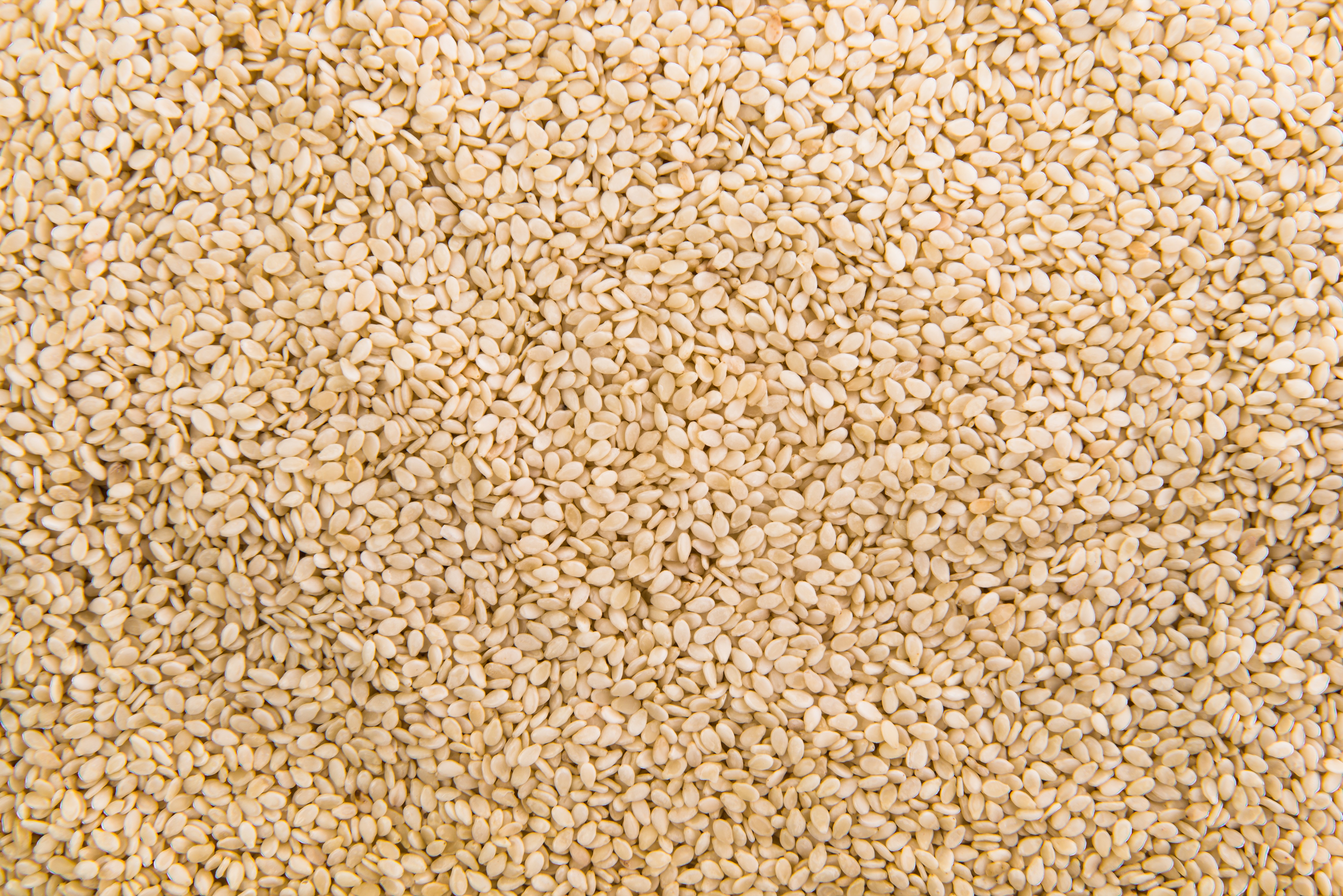
Today, the largest producers of sesame seeds include Sudan, India, Myanmar, Tanzania, and China, followed by Nigeria and Ethiopia.⁵ Interestingly, Myanmar is particularly known for its production of black sesame seeds.
Many of the most well-known Middle Eastern tahini brands source their sesame seeds not locally, but from East Africa—particularly Ethiopia and Sudan—where seeds are prized for their high oil content and balanced flavor.
From Seed to Paste: How Tahini Is Used
Tahini is both an ingredient and a foundation—a starting point from which countless dishes unfold.
It can be loosened into a bright, acidic sauce with lemon and garlic, folded into hummus for depth and creaminess, or transformed into halva, where bitterness meets sweetness in a delicate balance. It is drizzled over roasted vegetables, swirled into grain dishes, or used to finish plates with richness and contrast.
In some kitchens, it becomes a multi purpose ingredient—stirred into stews for the body, or whisked into dressings that cling to every leaf. In others, it takes center stage: spread thickly, paired with molasses, or eaten simply with bread.
Its magic lies in its duality—equally at home in savory and sweet, capable of grounding a dish or lifting it entirely.
Choosing a Good Tahini & My Personal Favourites
Not all tahinis are created equal.
Here in France, for instance, most tahinis available are Lebanese brands, followed by Turkish ones. There is one Egyptian tahini I find here—which is actually my favourite—and a Palestinian tahini that almost made me emotional the first time I tried it. The rest are what I would call “organic health food store” versions, which, to me, are closer to sesame butters and should not always carry the name tahini so lightly.
One key difference lies in the sesame itself. Traditional Middle Eastern tahinis are often made from hulled sesame seeds, which results in a smoother, more fluid, and refined paste. Many health food brands, on the other hand, use unhulled seeds, producing a thicker, grittier, and sometimes more bitter result.
A good tahini should be fluid and pourable, never stiff. It should feel silky but not watery or overly oily. Sometimes you can tell when a tahini is too processed—its texture becomes almost translucent, and the flavour feels diluted, lacking depth.
The taste should be nutty, rounded, and balanced, with just the slightest bitterness—enough to give structure, but never enough to dominate. When made from lightly roasted seeds, it will be pale in color, almost ivory.
I like to say a good tahini tastes like it was made yesterday. Tahini is rarely eaten straight from the jar—but a truly good one makes you reconsider that entirely.
And of course, a proper tahini should be made of 100% sesame seeds, and nothing else.
For me personally, my favourite tahinis available here in France are:
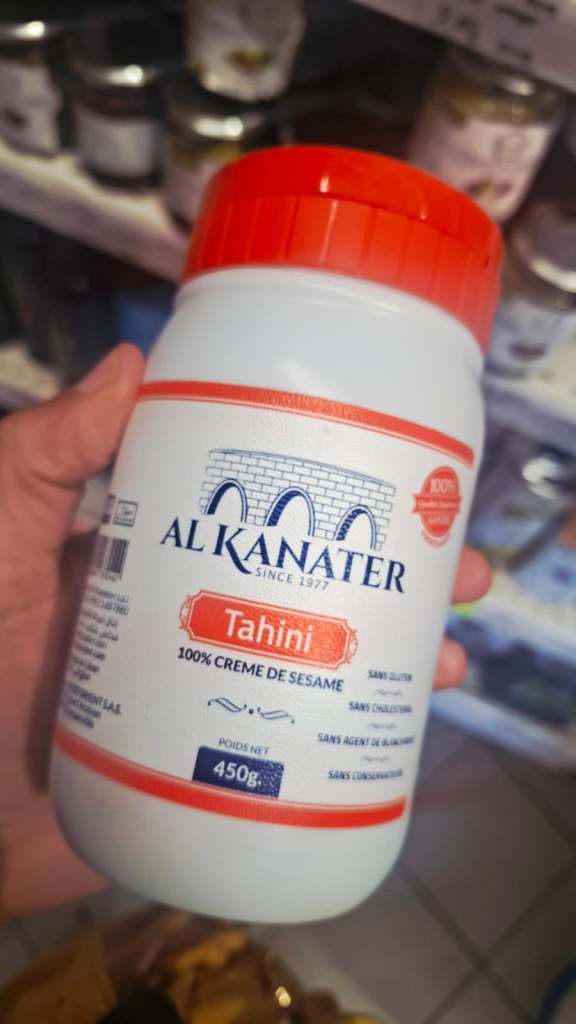
- Al Kanatar (Lebanese): Silky and well-balanced, with a delicate nuttiness and almost no bitterness, finishing clean and lightly sweet.
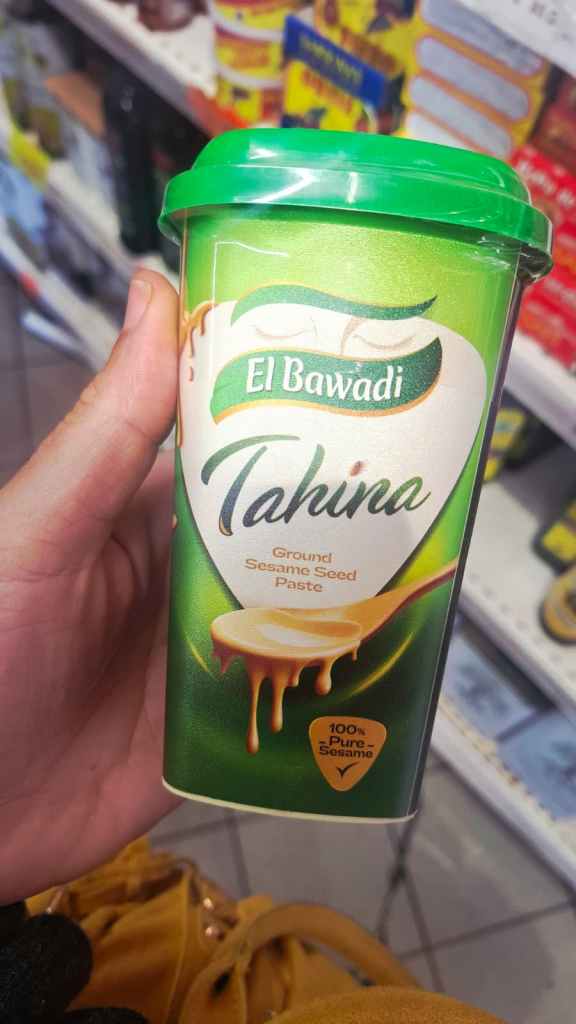
- El Bawadi (Egyptian): Slightly deeper and more robust, with a round (never burnt or harsh) toasted flavour and a lot of character—ideal if you enjoy a more pronounced sesame presence.
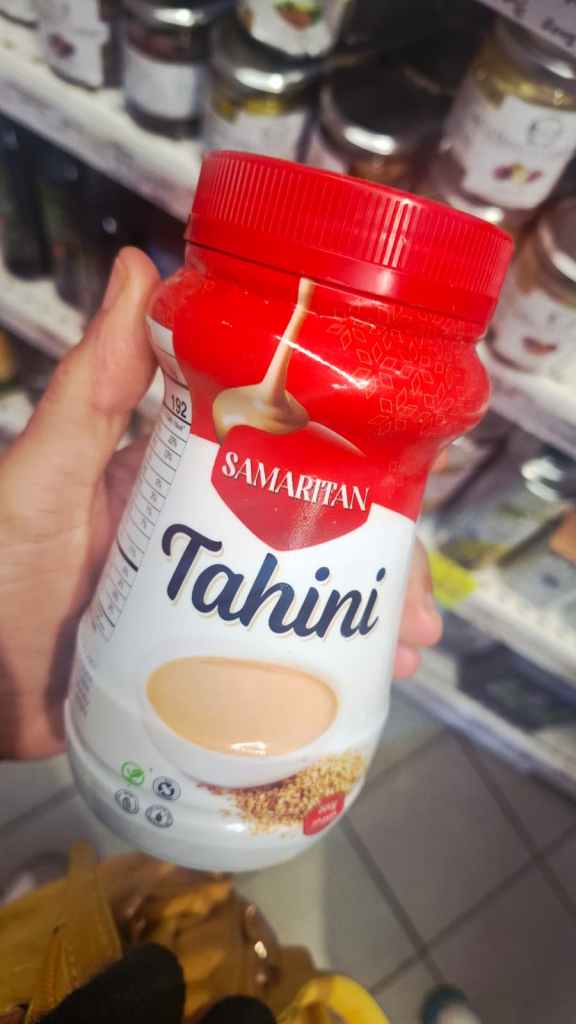
- Samaritan (Palestinian): Exceptionally smooth and fluid, with a refined, almost creamy lightness and a beautifully earthy, elegant finish.
All three can be found in Middle Eastern grocery stores in Paris. If you want to find them in one place, Sabah (their Aligre location) usually carries all three on their shelves—saving you from running across the city.
Tahini as a Health Food
Tahini’s reputation as a healthy food is well earned—but I’d love for us not to lose the plot: its intangible cultural legacy.
It is rich in unsaturated fats, calcium, iron, magnesium, and plant-based protein—making it both nourishing and sustaining. Sesame also contains lignans such as sesamin, which have been studied for their antioxidant properties.⁶ These same lignans are believed to support calcium metabolism, meaning that tahini doesn’t just contain minerals—it carries compounds that help the body actually make use of them. Once again, the brilliance of nature’s perfectly composed foods.
Sesame has also been studied for its ability to help lower LDL (“bad”) cholesterol, supporting overall heart health. It is also naturally rich in phytoestrogens—plant compounds that can gently mimic estrogen in the body—and which have been linked to supporting hormonal balance, particularly during menopause.
But long before modern nutrition labels, sesame was already understood as a strengthening food. In parts of the Middle East and South Asia, it was used to support digestion, nourish the body, and restore energy—especially during times of fatigue or recovery. Sesame oil, in particular, appears in ancient medicinal systems such as Ayurveda, where it is valued for its warming, grounding, and restorative qualities.⁷
Tahini, in this sense, sits at the intersection of food and care.
In my own kitchen, that extends beyond the plate. In my cookbook Food Curious, I include a simple tahini and honey face mask—deeply moisturizing and nourishing, and a reminder that the ingredients we cook with can also care for us in other ways. The kitchen has never just been a place to cook.
That said, tahini is also calorie-dense—something traditional cuisines have always understood. It is used generously, but with balance.
The Perfect Tahini Sauce
There is no single “correct” tahini sauce—only variations shaped by taste, culture, and memory.
At its core, it is disarmingly simple:
- Tahini
- Fresh lemon juice
- Garlic (optional)
- Salt
- Water
And yet, the transformation is where the magic lies.
As water is added, the tahini tightens, thickens, almost seizes—before loosening again into a pale, creamy emulsion. It’s a small act of alchemy in the kitchen, one that surprises you the first time you see it, and satisfies you every time after.
The result should be smooth, light, and balanced—neither too thick nor too runny, with a gentle brightness from the lemon and just enough depth from the sesame.
I know people who pound garlic cloves with salt in a mortar and pestle and then pour over fresh lemon juice and let that sit for a while before incorporating it into the tahini. Each kitchen, each culture, each cook carries its own version.
And perhaps that is the point—tahini sauce is less a fixed recipe than it is a gesture.
A gesture that has existed, in one form or another, for centuries—long before many of the condiments we consider modern staples today.
Fun fact: sesame-based sauces like tahini predate mayonnaise by centuries—the latter only appearing in European cookbooks in the 18th century.
Tahini reminds us that not everything ancient disappears.
Tahini is, at its heart, a simple ingredient: sesame, ground.
And yet, it carries within it centuries of trade, culture, adaptation, and nourishment. It exists at the intersection of ancient and modern, of local and global, of necessity and pleasure.
In a Food Curious world, tahini is not just something we drizzle over a dish. It is something we trace—back through time, across borders, and into the wisdom of ingredients that have always known how to sustain us.
Footnotes
- Hans Wehr, A Dictionary of Modern Written Arabic, ed. J. Milton Cowan (Ithaca: Spoken Language Services, 1976).
- K. H. Bedigian, “Sesame: The Genus Sesamum,” in Handbook of Plant Breeding (New York: Springer, 2010).
- Nawal Nasrallah, Annals of the Caliphs’ Kitchens (Leiden: Brill, 2007).
- Andrew Dalby, Food in the Ancient World from A to Z (London: Routledge, 2003).
- Food and Agriculture Organization (FAO), “FAOSTAT: Sesame Seed Production Data,” accessed 2026.
- Michio Namiki, “Nutraceutical Functions of Sesame: A Review,” Critical Reviews in Food Science and Nutrition47, no. 7 (2007): 651–673.
K. T. Achaya, Indian Food: A Historical Companion (Delhi: Oxford University Press, 1994).
 FOOD CURIOUS
Leave a comment