When I lived in Jamaica and ran my own restaurant, one thing I had to watch closely was ingredient cost. As a plant-based place that wanted to keep prices accessible—while changing the menu daily and keeping it exciting—staying on top of costs (without ever compromising flavour or pleasure) was essential.
Because of Jamaica’s climate volatility—droughts, then heavy rainy seasons—I quickly learned that both prices and availability could swing dramatically. From the start, a fixed menu simply didn’t make sense. I wasn’t going to spend an arm and a leg on lettuce during drought season.
So my strategy was simple: cook with what farmers had in season and at a good price. Sustainability mattered to me, too. I didn’t want to rely heavily on imported blueberries and broccoli if it meant the customer would pay for it—and only be able to afford eating at my restaurant once a week. It had to make sense. In many ways, I cooked the way my grandmother did: in season, at a good price, with the mindset of feeding a village.
And within that rotation, three vegetables hit the sweet spot most of the year: pak choi, callaloo (amaranth greens), and… cabbage.
I used all three often and in many different ways, but cabbage was the one I saw real potential in.
Because it has so much texture and a relatively neutral flavour (it picks up whatever you give it), it opened up a whole world of possibilities: raw, roasted, stir-fried, seared, stuffed, deep-fried, pickled—anything. Cabbage is wildly underrated. The only thing I haven’t made with it yet is dessert!
Still, I had to deal with the cabbage haters. More often than not, I’ve come to realise that people “hate” certain vegetables because they had one bad experience with them as kids—and that becomes a kind of food trauma.
Many people enjoyed cabbage roasted, especially when it had a nice char and bite. But when I fried it? Whole other story.
Even after leaving Jamaica, here in France, my crispy cabbage fritters are met with pure enthusiasm.
Over the years, I’ve adjusted the recipe and it’s grown into something deeply personal. It’s inspired by Jamaica’s fritter culture—one of life’s simplest pleasures. After a day at the beach, nothing felt better than a fritter with a chilled drink. There’s also a clear homage to South Asian cooking: India, especially, has been a huge teacher for me, and you can absolutely see the pakora resemblance here. Along the way, I’ve also integrated elements of Korean yachaejeon (vegetable pancakes) and the use of potato starch, which I came to love through Japanese karaage (veganized, for me). Potato starch is what makes these fritters extra crispy.
And because I’ve never measured anything for this recipe (it’s truly intuitive and straightforward), I’m sharing it step by step.
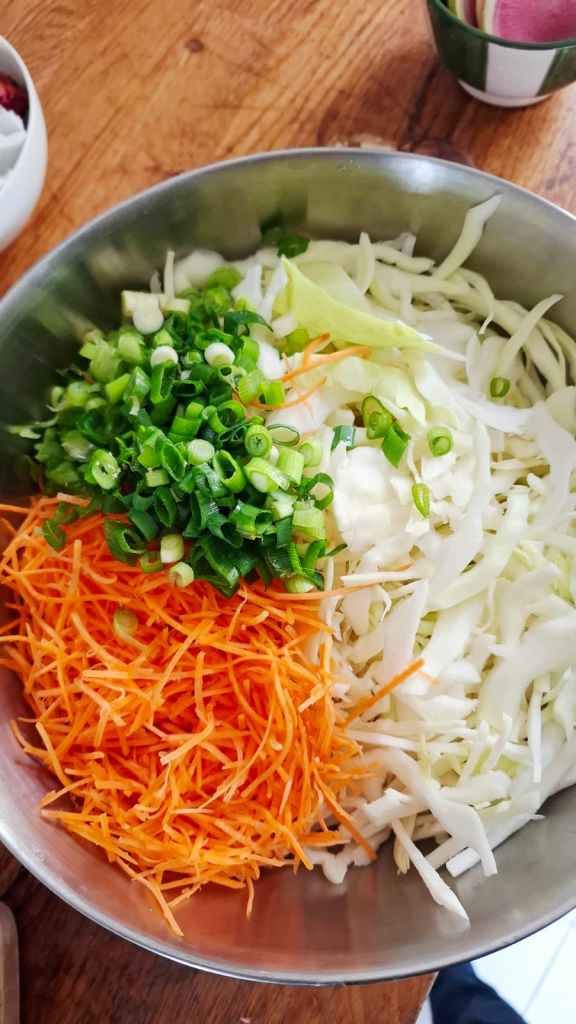
STEP 1: Place your vegetables in a large bowl. I like to use plenty of cabbage as the base, usually with carrots and either sliced green onions, white onions, or red onions—whatever I have on hand. I do recommend including an allium of your choice for that extra hit of umami.
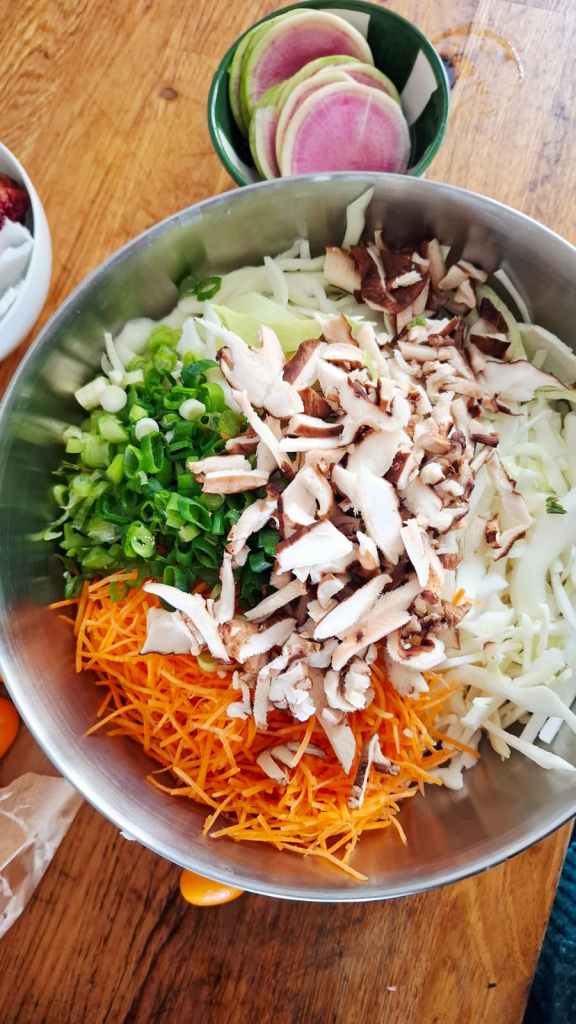
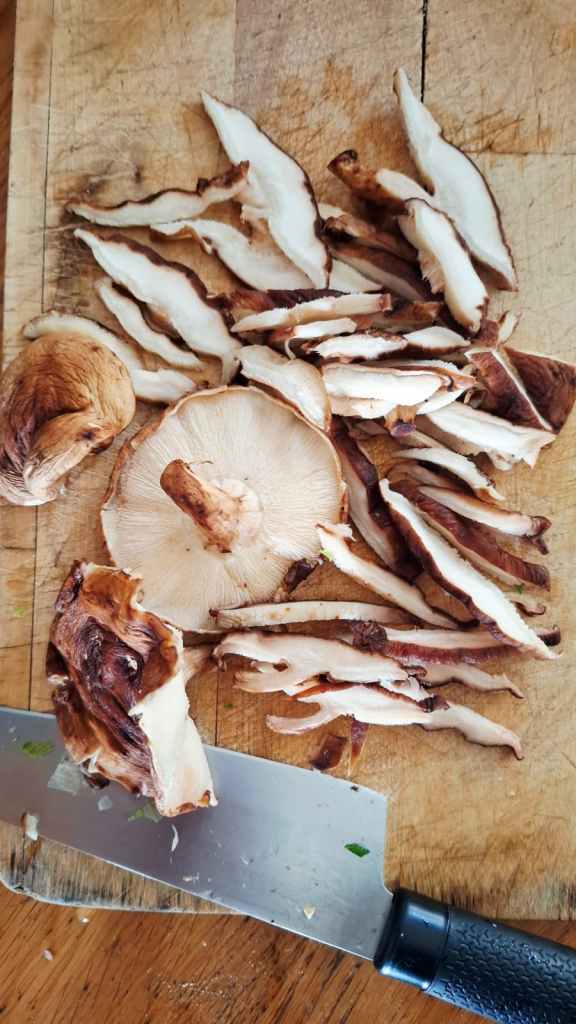
STEP 2: One of the secret ingredients: sliced mushrooms. This is not mandatory, but it does make a difference. Over the years, I’ve realised that adding mushrooms elevates the flavour immensely—which makes perfect sense, as they’re a natural source of umami. I especially love using shiitake for their deep, rich intensity.
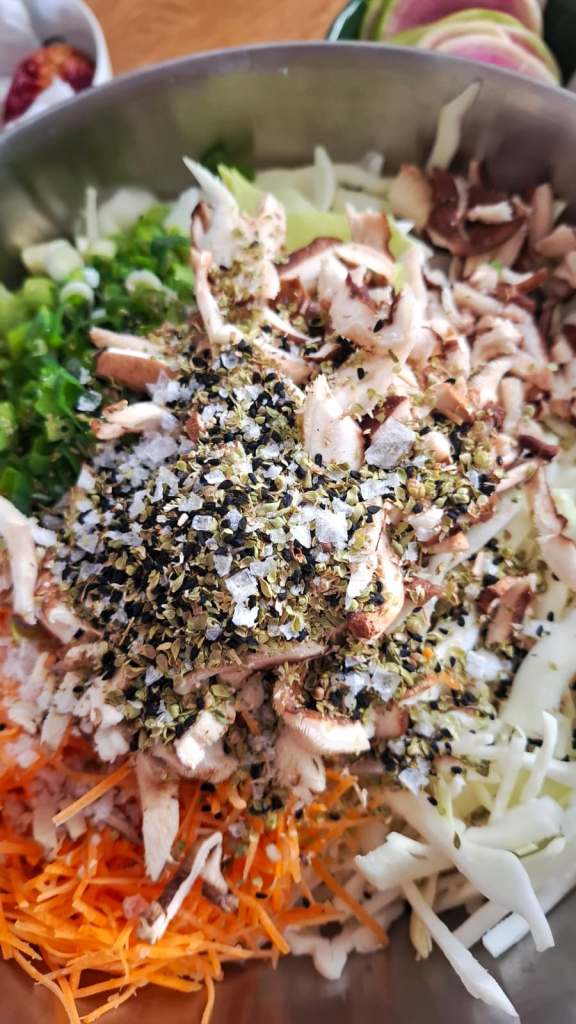
STEP 3: Add your seasonings. My rule of thumb is simple: something green, something brown, plus garlic and salt. Personally, I also almost always add nigella seeds for their beautifully savoury, oniony flavour, and a bit of chili pepper because I do like some heat. For the “green,” I usually use thyme and/or oregano; for the “brown,” it’s most often cumin. After years of cooking, I’ve found there’s a kind of magic that happens when green and brown spices are paired together.
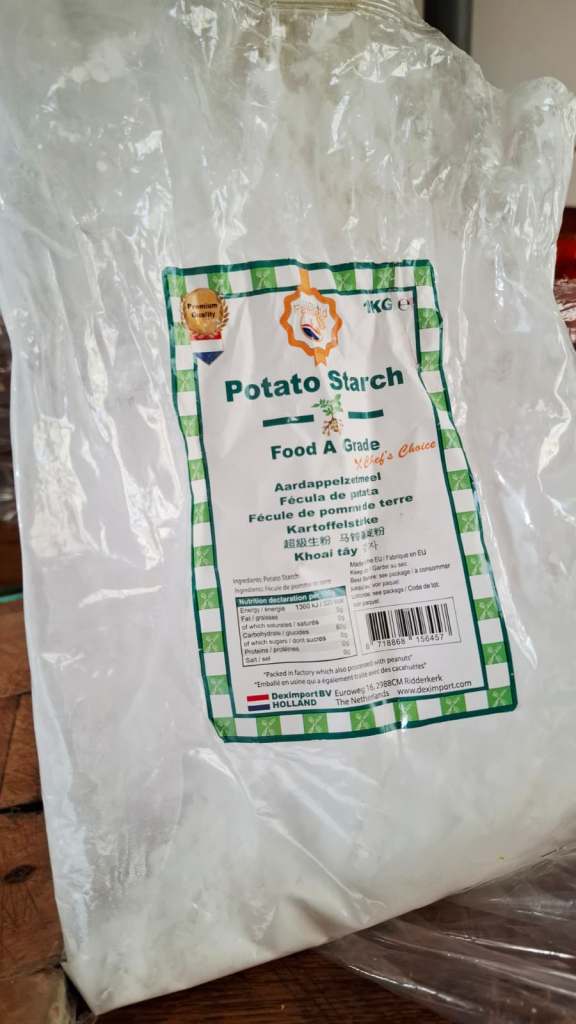
STEP 4: Mix the vegetables together, then add a little flour (wheat or chickpea) and the most important ingredient: potato starch. I learned about the incredible crisp-giving qualities of potato starch through Japanese cuisine, where it’s famously used in karaage. Aim for a 1:2 ratio of flour to potato starch—meaning the potato starch should be twice the amount of flour. You can find potato starch in most Asian supermarkets. While the photo below might make it look like I’m using a lot of flour, it’s actually much less than you’d think. This is very much a veg-forward recipe: there’s roughly three times more vegetables than flour.
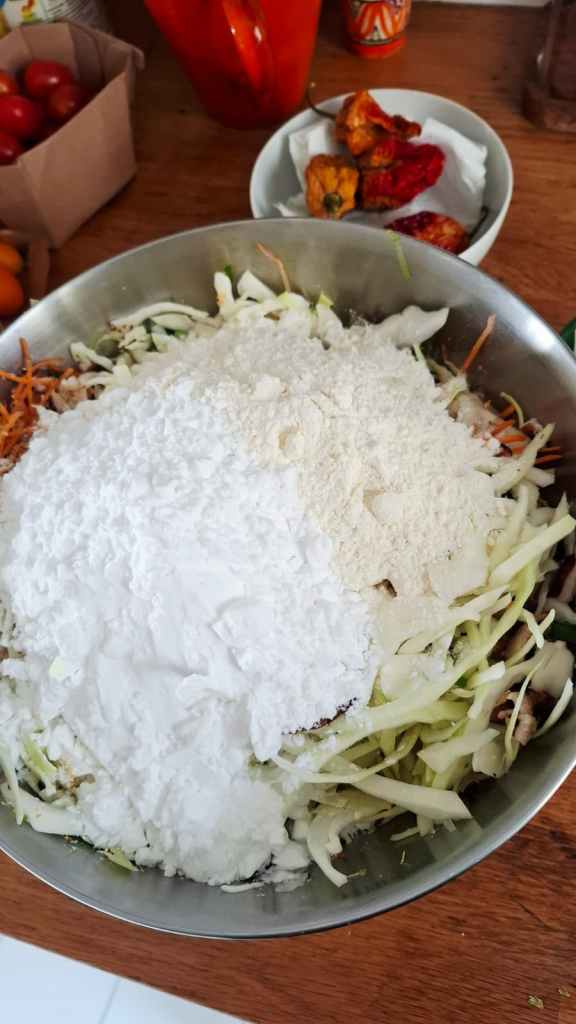
STEP 5: Add a little water and start mixing—using your hands. Add the water gradually, as the cabbage will naturally release its own moisture as you work it. The more you mix, the more the potato starch combines with the liquid to form a light binding batter. The vegetables should be just coated—this fritter is all about more veg, less batter.
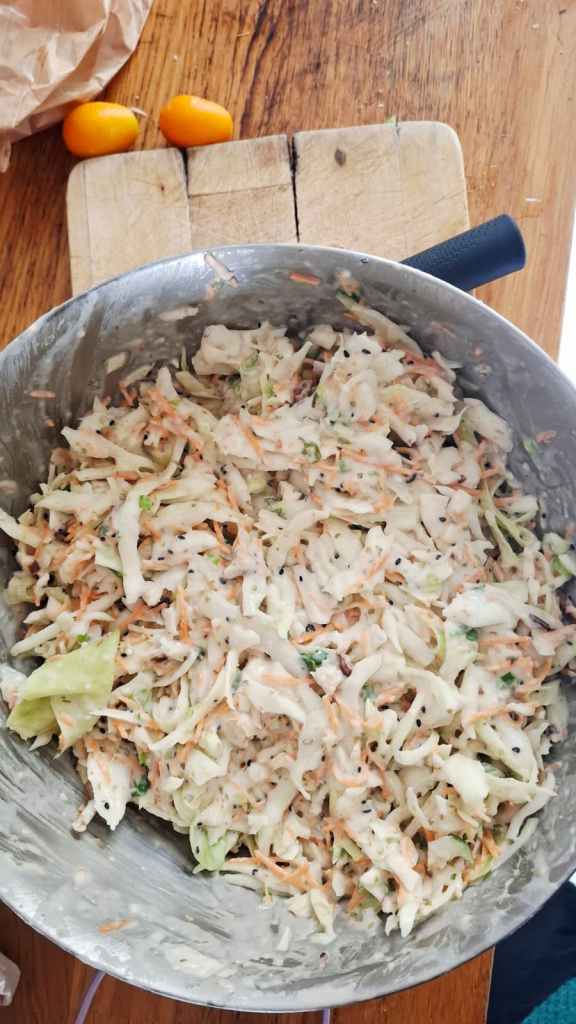
STEP 6: Test fry. Fry in a neutral-tasting oil (sunflower, for example) and always cook one fritter first to check the seasoning. Once I’m happy with the flavour, I go ahead and fry the rest.
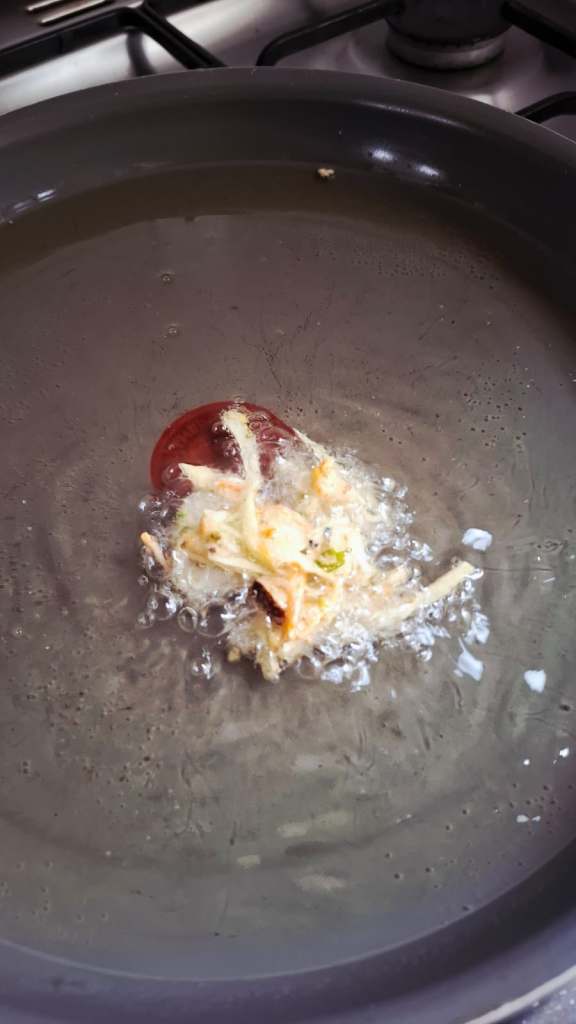
STEP 7: Fry and serve! One important rule—true for frying anything—is not to overcrowd the pan. For these fritters, I like to keep them fairly flat so they fry up extra crispy.
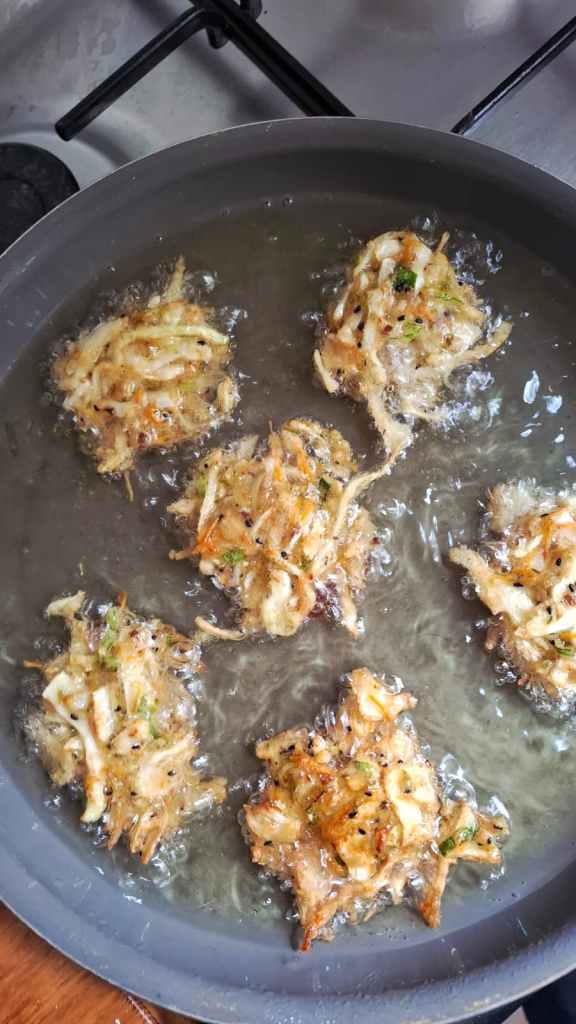
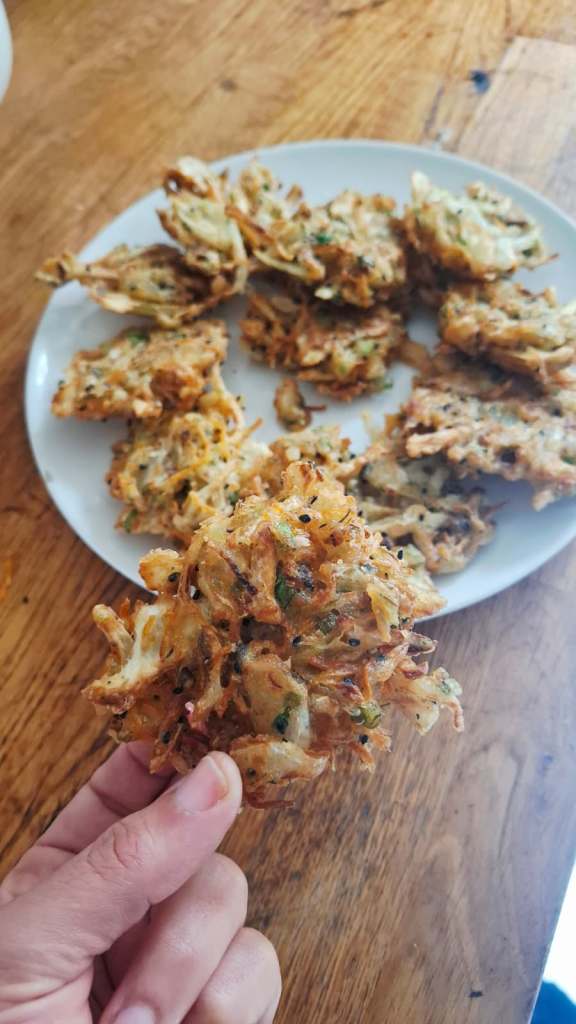
To serve, I love pairing them with pickled ginger and plenty of mixed fresh herbs. I’ll take a fritter, top it with ginger and herbs, and bite straight in. If not, a dip (or two) is a must. Tahini-based dips are an obvious go-to—I always have a jar on hand—but tamarind chutney works beautifully too, as do sweet, tomato-based sauces. A salad on the side and some bread makes it a complete “mix and match” meal.
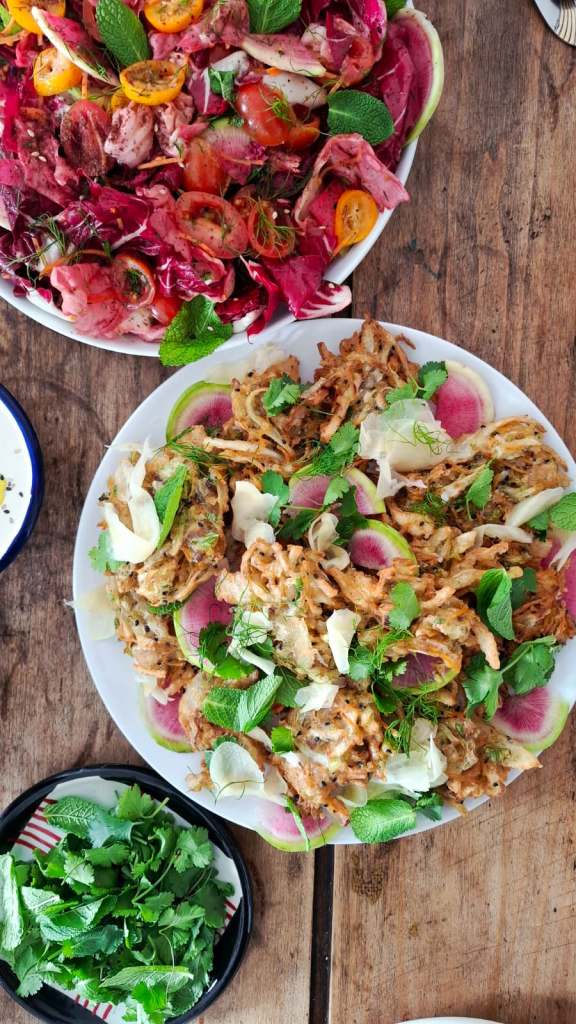
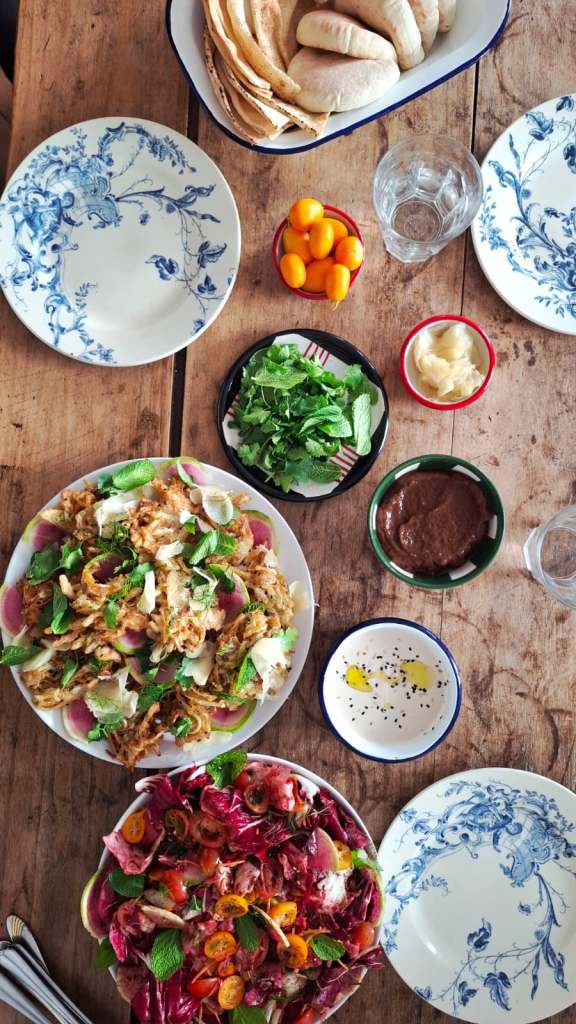
I hope you give this a try! Let’s recap the key tips:
- More veg, less flour
- Potato starch : flour = 2:1 (wheat or chickpea flour)
- Let the fritter mixture rest for 30 minutes before frying
- Seasonings: salt, garlic, onions, something green (thyme, oregano, fenugreek leaves, etc.) and something brown (cumin or a good garam masala blend)
- Test-fry one fritter to adjust seasoning if needed
- Don’t overcrowd the pan
- Always fry in clean, fresh oil
Enjoy!
 FOOD CURIOUS
Leave a comment