When people think of French culinary culture, they usually picture classic stereotypes like baguettes, croissants, and wine. But did you know that France also grows its own rice and chickpeas — and that these products are protected by tradition and law? In fact, there are over 400 products in France with official AOP (Appellation d’Origine Protégée) or IGP (Indication Géographique Protégée) status. AOP means the product is made entirely within a specific region using traditional methods, while IGP shows that the product has a strong connection to its geographic area but allows for a bit more flexibility in production. France actually leads Europe (followed by Italy and Spain) in the number of these protected products, a true reflection of its rich and diverse regional food heritage.
When I came back to France after being away for 15 years, I found myself especially drawn to these lesser-known AOP and IGP ingredients. As someone who cooks, I love seeking out local flavors — the kind of ingredients that carry the soul of a place. These hidden gems tell stories, and they’ve become a new source of inspiration in my kitchen. Take a look at the list below and maybe discover something new to taste, try, or bring back home as a meaningful (and delicious) souvenir from your trip when visiting France.
The actual list of AOP/IGP products is much longer than what I’ve outlined below (lots of meats, cheeses, etc). But I’ve chosen to focus on vegan friendly & honey based products. There are lots more, and I hope this inspires you to look at country culinary cultures beyond the stereotypes!
🥇 Comprehensive List of Vegan-Friendly French AOP, IGP, and Controlled Products (list also includes honey)
Grains, Legumes & Cereals
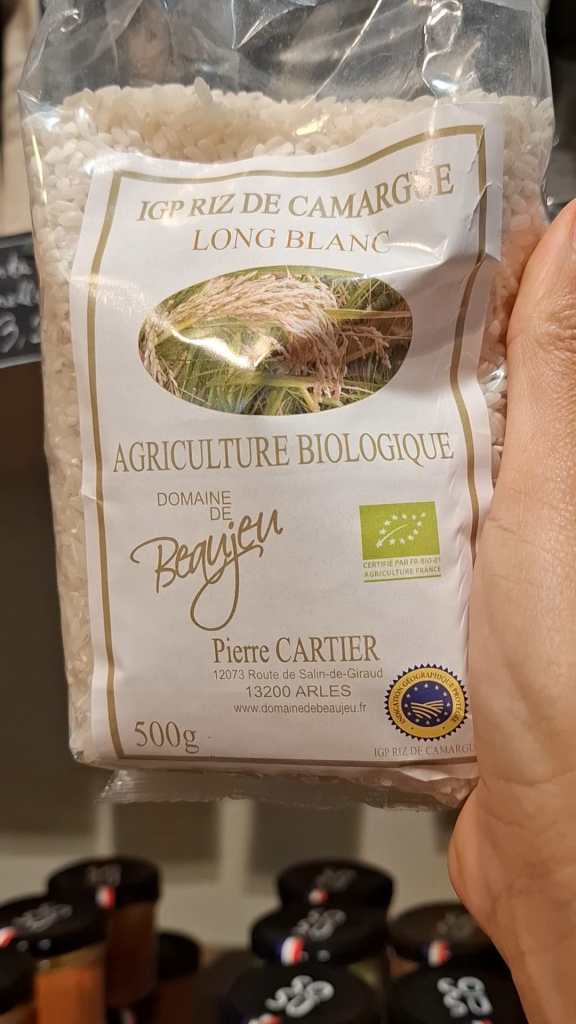
Riz de Camargue (IGP) — Rice from Camargue, it comes in white, black and red varieties. Farmers follow strict sustainable practices to maintain the delicate ecosystem of the Camargue. The rice is often grown in flooded fields, which also serve as important habitats for migratory birds and other wildlife.
Lentille Verte du Puy (AOP) — A famous green lentil variety grown in volcanic soil, around the town of Le Puy-en-Velay in the Auvergne region of France. It’s celebrated for its exceptional taste, texture, and nutritional qualities
Lentille Blonde de Saint-Flour (IGP) — A distinctive blond (light tan) lentil variety grown in the Saint-Flour area in the Cantal department of the Auvergne region in France. This lentil is prized for its delicate flavor, texture, and the unique terroir where it is cultivated.
Lentilles de la Vallée du Lot (IGP) — Lentils from Lot Valley are generally small and brown, known for their smooth texture and mild, slightly sweet taste, making them versatile for many dishes.
Haricot Tarbais (IGP) — A prized white bean from the Tarbes region in southwestern France, known for its large size, tender skin, and creamy texture when cooked. It’s a staple in traditional French dishes like cassoulet and is celebrated for its delicate flavor and ability to absorb rich stews beautifully.
Pois Chiche de Castelnaudary (IGP) — This locally grown chickpea is essential to the famous cassoulet of Castelnaudary, celebrated for its thin skin and buttery texture. Its cultivation in the sun-soaked soils of southern France gives it a rich, earthy flavor ideal for slow-cooked dishes.
Blé de Khorasan (IGP) — You may know this as Kamut, this is in fact an ancient foreign-origin grain (originating from the “Fertile Crescent”) that adapted very well to French terroir, it’s grown in parts of southern France, valued for its nutty flavor and high protein content. Its large golden grains and natural resilience make it popular in artisanal breads, pastas, and health-conscious cooking.
Fruits & Vegetables
Tomate de Marmande (IGP) — Marmande tomatoes are an heirloom variety from the town of Marmande in the southwest of France. It’s been grown there since the 19th century and is beloved for its authentic, rustic charm. They’re known for their full, juicy, sweet-tart flavor, with a nice balance of acidity.
Asperges des Sables des Landes (IGP) — Sand-grown Asparagus from Les Landes is a truly unique French product, prized for its delicate flavor and tender texture. Thanks to the sandy terroir, they are especially tender and less fibrous, with a mild, slightly sweet, and nutty flavor.
Oignon de Roscoff (AOP) — Pink onions and a beloved culinary treasure from Brittany, Roscoff onions are less pungent, naturally sweet, and easy on the stomach.
Ail Rose de Lautrec (IGP) — This garlic is famous for its rosy-hued outer skin, which gives it a beautiful, almost ornamental look. Lautrec garlic has a mild, sweet, and aromatic flavor — far less harsh than industrial garlic.
Chasselas de Moissac (AOP) — Celebrated for its golden hue, delicate skin, and sweet, honeyed flavor, this table grape from the Moissac region in southwestern France is the first fresh fruit in France to receive the Appellation d’Origine Contrôlée (AOC) in 1971
Melon du Quercy (IGP) — Grown in the sunny limestone soils of the Quercy region in southwestern France, and always hand-harvested at peak ripeness, this cantaloupe is recognized for its vibrant orange flesh, balanced sugar content, and intense aroma.
Mirabelle de Lorraine (IGP) — Renowned for its high natural sugar content, delicate floral aroma, and juicy flesh, this small, golden-yellow plum grown exclusively in the Lorraine region is a treat that you see every summer for a short window. A personal fave.
Pruneaux d’Agen (IGP) — Soft, naturally sweet dried plums made from the Ente plum, grown and processed in the Lot-et-Garonne region of southwest France. Known for their rich, caramel-like flavor and tender texture
Pomme du Limousin (AOP) — The only apples in France with AOP status, these crisp, juicy apples grown in the high-altitude orchards of the Limousin region in central France and are known for their perfect balance of sweetness and acidity.
Pommes de Terre de l’Île de Ré (IGP) — These early-season potatoes are grown exclusively on the Île de Ré, off France’s Atlantic coast. Thanks to the island’s mild oceanic climate and sandy, mineral-rich soil, these potatoes have a delicate, almost sweet flavor, thin skin, and fine texture.
Cèpe de la Forêt d’Orléans (AOP) — These wild porcini mushrooms are found in the expansive Forêt d’Orléans, the largest national forest in France, located in the Centre-Val de Loire region. This forest, rich in oak and pine trees, provides an ideal habitat for these prized mushrooms, known for their firm texture and nutty flavor.
Citron de Menton (IGP) — Fragrant, sweet-skinned lemon from the Riviera, used in marmalades, zesting, and desserts.
Clémentine de Corse (IGP) — Naturally sweet, seedless clementines grown on Corsican soil, harvested by hand. They are seedless because the clementine orchards are carefully managed and isolated from other citrus varieties — especially pollinating citrus like lemons or certain oranges. This means no cross-pollination occurs, which is what usually causes seeds to develop in citrus fruits. Additionally, the variety itself is a naturally parthenocarpic hybrid — meaning it can form fruit without fertilization. In simple terms: no pollination, no seeds.
Nuts & Seeds
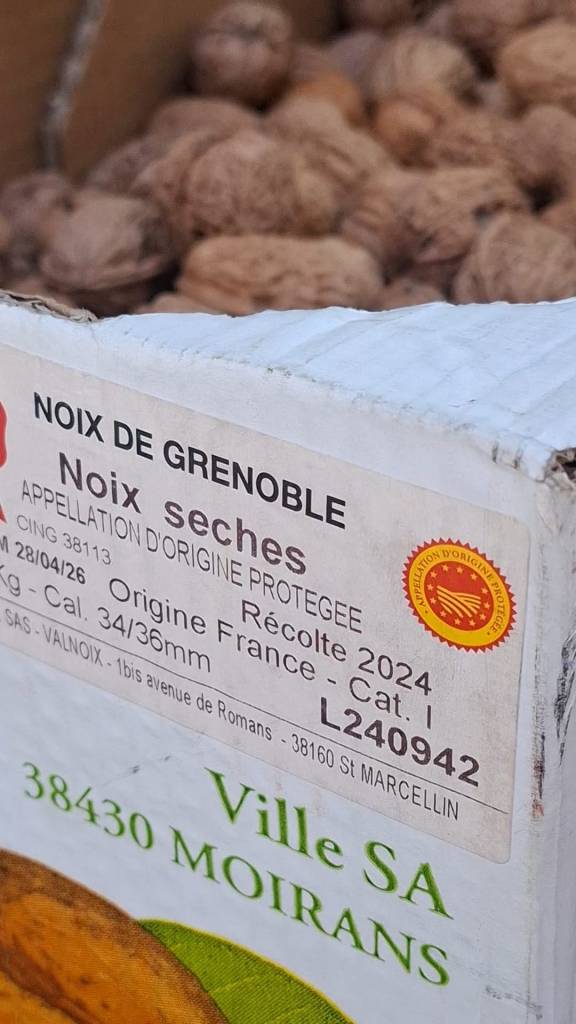
Noix de Grenoble (AOP) — Interestingly enough, these walnuts were actually the first fruit in France to receive AOP status, back in 1938 (then called AOC). The Grenoble walnut orchards are nestled between the Vercors, Chartreuse, and Belledonne mountain ranges. The cool, humid Alpine air, coupled with mineral-rich alluvial soil, gives the nuts their unique character: thin shells, full kernels, and deep flavor.
Noix du Périgord (AOP) — These high-quality walnuts grown in the Périgord region of southwestern France are prized for their rich, buttery flavor, fine oil content, and crunchy texture.
Châtaigne d’Ardèche (AOP) — From the mountainous Ardèche region of southeastern France, these chestnuts are celebrated for their sweet, nutty flavor and fine texture. With over 65 local varieties protected under the AOP label, these chestnuts are traditionally roasted, turned into purée, or candied as marrons glacés. The Ardèche region has centuries-old chestnut-growing traditions!
Oils
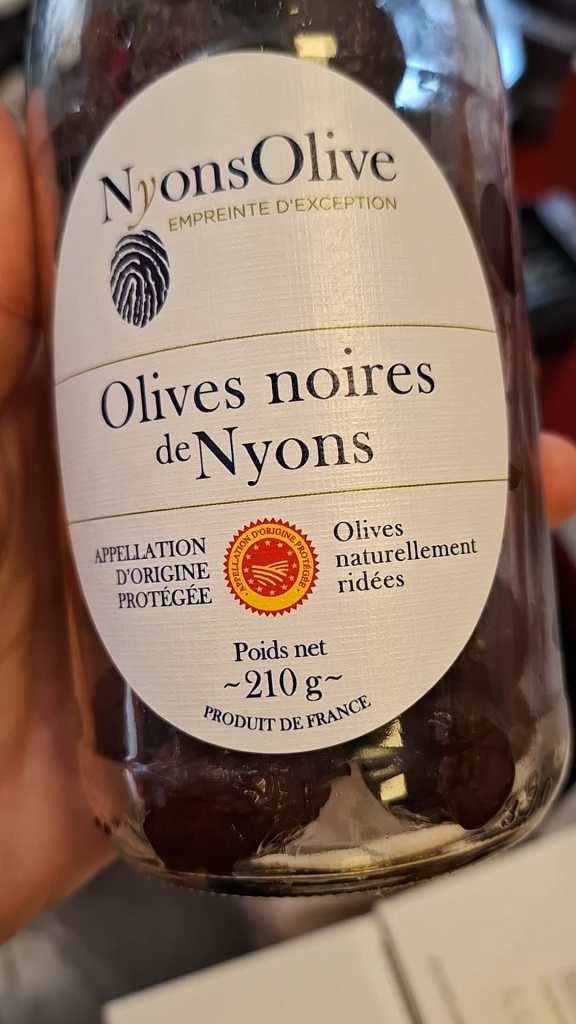
Huile d’Olive de Nyons (AOP)- One of France’s most celebrated olive oils — not only because of its smooth, buttery taste, but also because it holds the very first AOP granted to an olive oil in France (in 1994). A very low acid, no harshness oil, it’s known for being delicate, with notes of green apple, hazelnut, and sometimes even freshly cut grass.
Huile d’Olive de la Vallée des Baux-de-Provence (AOP)- A prestigious olive oil produced in the rugged, sun-soaked hills of the Baux-de-Provence region in southern France, this oil is known for its rich, fruity aroma with notes of almond, artichoke, and fresh herbs.
Huile d’Olive de Haute-Provence (AOP)- a high-quality extra virgin olive oil made mainly from Aglandau olives, known for its fruity, slightly peppery flavor with notes of artichoke and almond. Produced using traditional cold-press methods, it reflects the rich terroir of southeastern France and is prized in Mediterranean cuisine.
Huile de Noix de Grenoble (AOP) — A premium walnut oil from the Grenoble region, known for its delicate, fruity flavor. It’s cold-pressed from local walnuts, preserving its rich aroma and perfect for dressings and gourmet dishes.
Salts & Minerals
Fleur de Sel de Guérande (IGP)– A hand-harvested sea salt from Brittany, known for its delicate, flaky crystals and subtle mineral flavor. It’s prized as a finishing salt to enhance dishes with a mild crunch and depth.
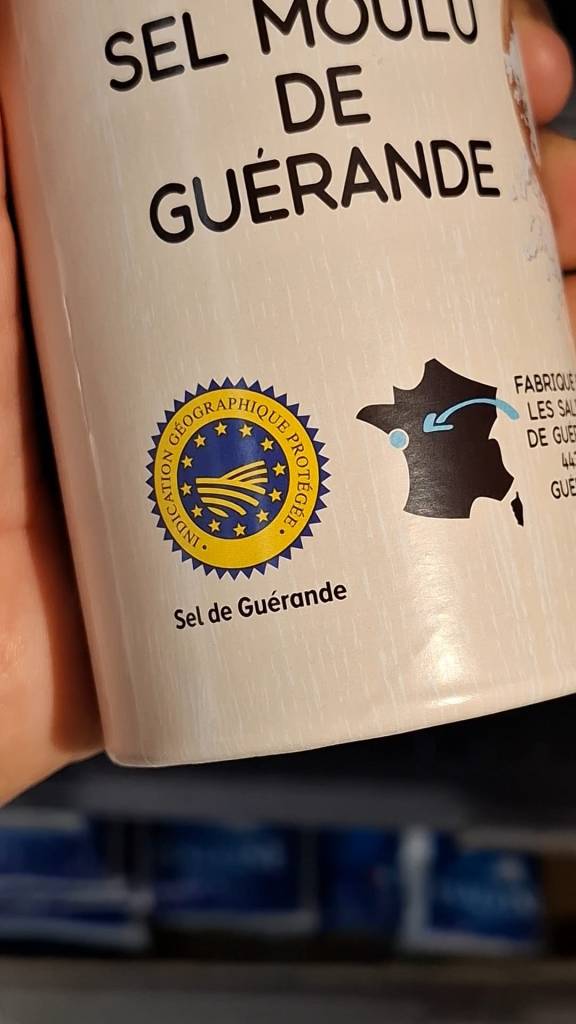
Sel de Guérande (IGP)- This coarse sea salt from the Guérande salt marshes is harvested traditionally and valued for its natural moisture and rich mineral content. It’s perfect for seasoning and cooking.
Sel de l’Île de Ré (IGP) — A natural sea salt harvested from the salt marshes of Île de Ré, it is known for its clean taste and balanced mineral content. It’s prized for cooking and finishing dishes.
Spices & Herbs, Condiments
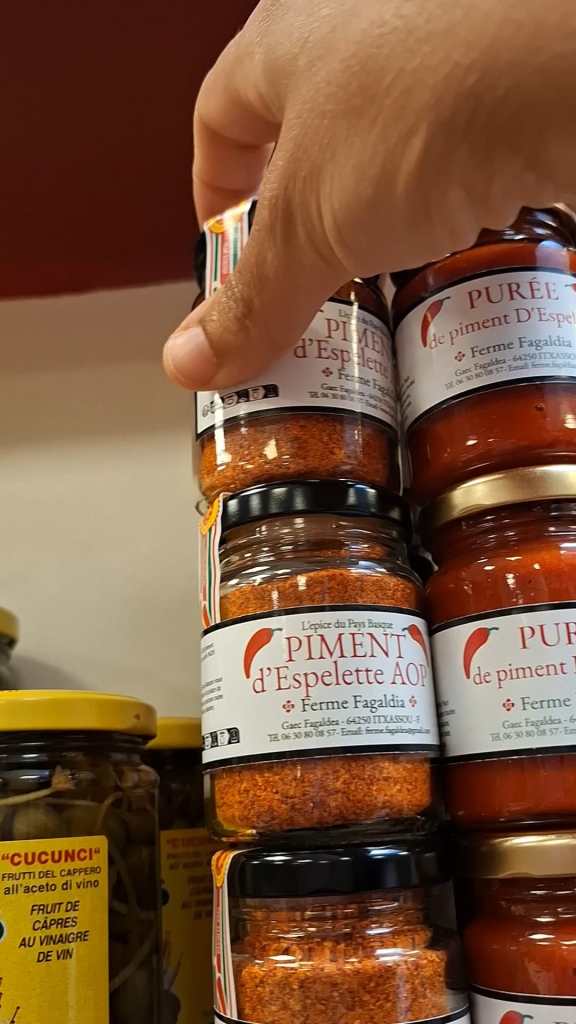
Piment d’Espelette (AOP) — This mild chili pepper from the Basque region is known for its fruity, smoky flavor and vibrant red color. It’s a staple spice in French and Basque cuisine.
Safran du Gâtinais (IGP) — A high-quality saffron from the Gâtinais region, it’s prized for its intense aroma and vibrant color. It’s carefully hand-harvested, making it one of France’s most valued spices.
Moutarde de Bourgogne (IGP) — A traditional mustard from Burgundy, made with local mustard seeds and white wine. It’s known for its smooth texture and rich, tangy flavor.
Honeys
Miel de Corse (IGP) — This protected honey from Corsica is known for its unique floral and herbal notes derived from the island’s diverse wildflowers. It’s prized for its rich, aromatic flavor and natural purity.
Miel d’Alsace (IGP) — Valued for its delicate floral aroma and smooth taste, reflecting the diverse blossoms of the area’s countryside, this honey from the Alsace region is prized for its purity and traditional production.
Miel des Cévennes (IGP) — Known for its rich, aromatic flavor influenced by chestnut and wildflower blossoms, this honey from the Cévennes region is appreciated for its natural, traditional production and unique taste.
Miel de Provence (IGP) — Honey from Provence that is fragrant with floral notes of lavender, thyme, and rosemary. It’s valued for its rich aroma and authentic regional character.
 FOOD CURIOUS
Leave a comment