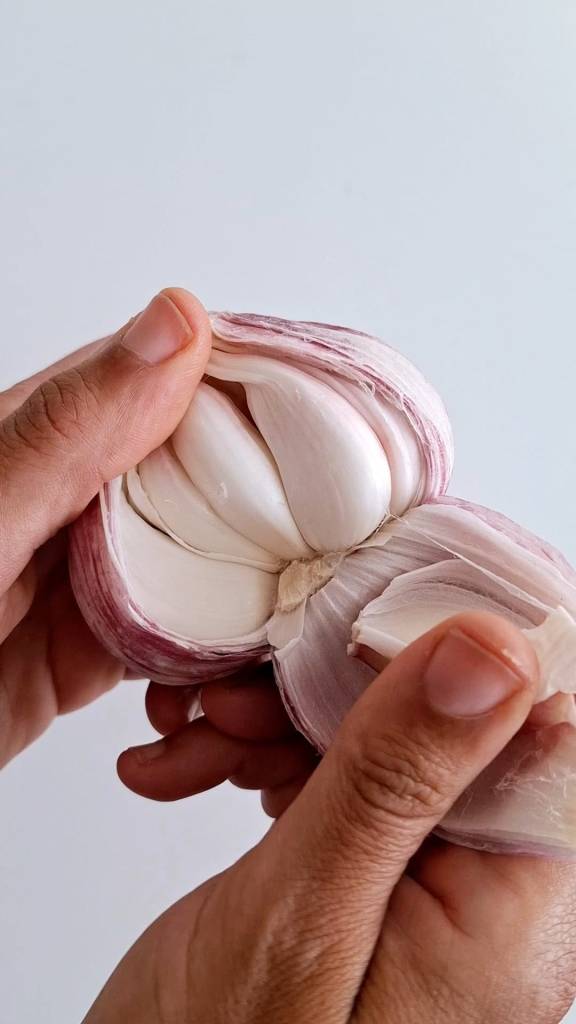
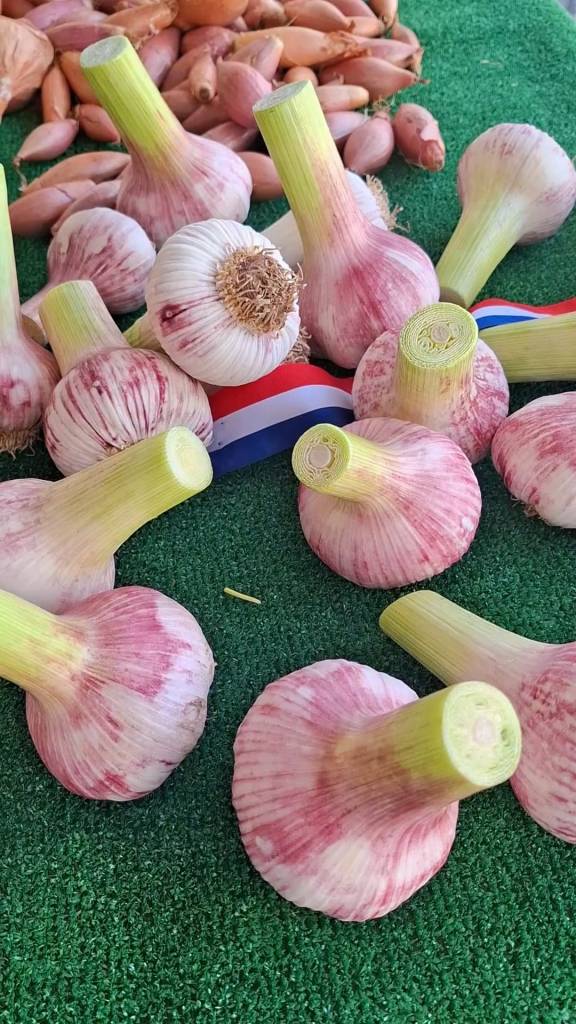
We just came out of wild garlic season, and now we can enjoy another aspect of garlic! As spring unfolds across France, market stalls begin to glow with the soft lavender-white hues of ail nouveau—fresh garlic pulled straight from the earth, before it has been cured. Unlike the papery, sharp-edged garlic we use year-round, ail nouveau is tender, juicy, and remarkably fragrant, offering a fleeting taste of the season’s awakening.
Where Does It Come From?
Ail nouveau is grown across several regions of France, but it’s particularly celebrated in:
Drôme (Auvergne-Rhône-Alpes) – known for early-season harvests.
Provence – where sunlight and soil produce especially aromatic bulbs.
Loire Valley and Tarn – traditional garlic-growing regions with deep agricultural heritage.
You’ll often find it labeled by region at your local marché, with varieties like ail violet (purple garlic) or ail blanc de Lomagne making appearances.
What Makes It Special?
Fresh garlic is harvested before it’s cured, meaning you’ll notice that:
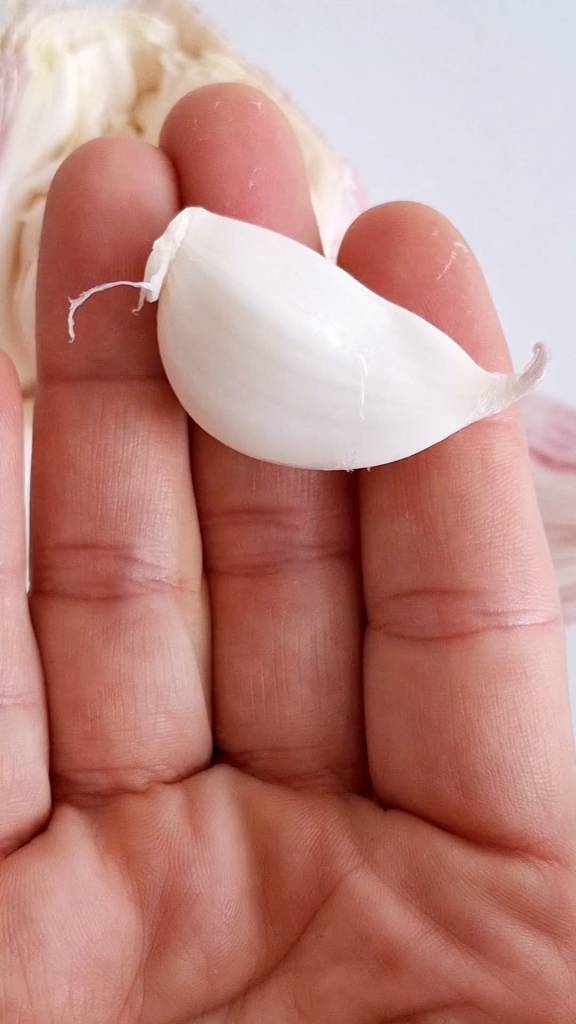
-The cloves are moist, plump, and easy to peel. You can easily peel them with your fingers, and they feel a little juicy and slippery to touch.
-It has a milder, more delicate flavor—almost sweet when raw, and creamy when cooked. This makes it easier to eat a clove for health reasons (which I get into later).
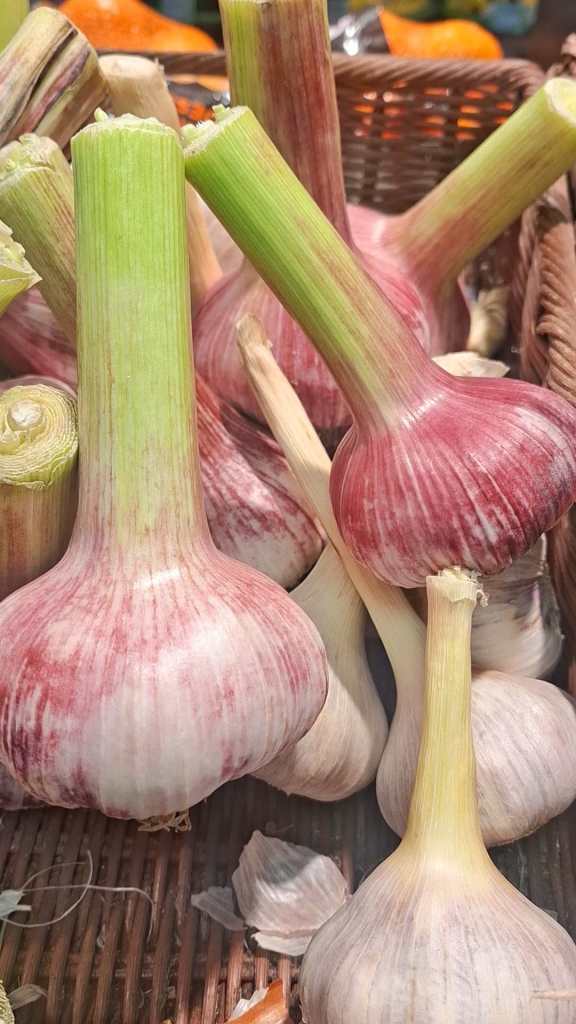
-The entire bulb is often usable, from the slightly green stalks to the soft skin—similar to young spring onions.
It’s a garlic you can slice raw into salads, smash into a vinaigrette, stir into tahini sauces, or gently roast whole with vegetables. In short: it’s garlic at its most tender and poetic.
Culinary Notes
Use it raw to appreciate its milder bite—grated over fresh warm toasted bread, stirred into dips, or crushed into lemony dressings.
Gently sautéed, it melts into a sweet, mellow base for spring soups, grains, or sautéed greens.
It’s ideal in, not coincidentally, a lot of other produce that is also in season these days: think new potatoes, asparagus and lots of fresh herbs (especially dill, parsley, and chives).
Health Benefits (Especially Raw)
Fresh garlic, like its mature counterpart, is full of medicinal properties—but fresher means more active compounds like allicin, released when it’s crushed or chopped. It’s known for:
Immune support – antibacterial, antiviral, and antifungal.
Heart health – helps lower blood pressure and cholesterol.
Detoxification – supports liver health and heavy metal elimination.
Digestive benefits – stimulates gut enzymes and may support healthy bacteria.
Compared to cured garlic, fresh garlic has more moisture and slightly higher levels of certain antioxidants—though both are wonderfully good for you.
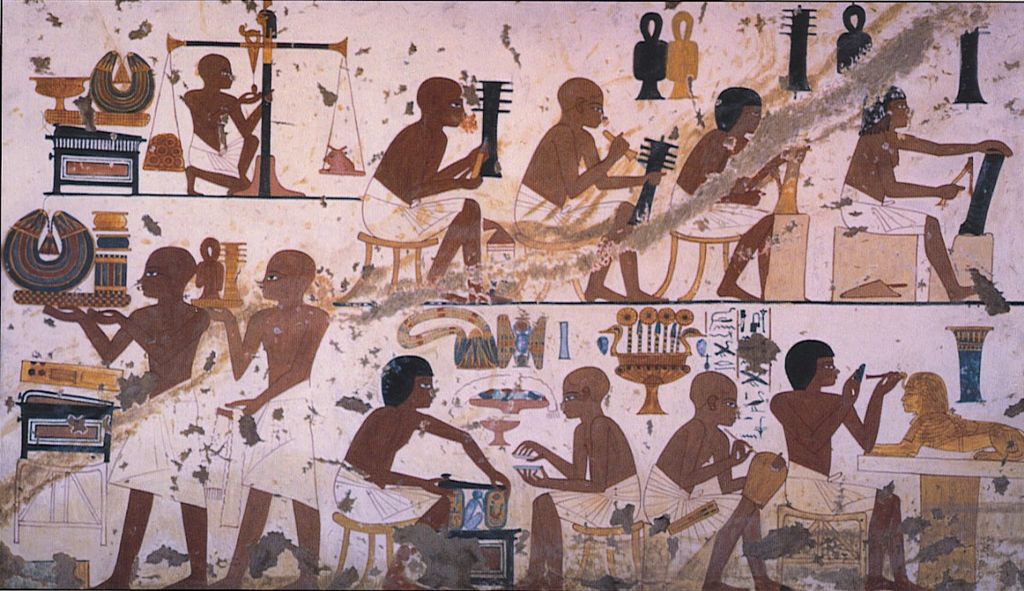
Photo credit: historycollection.com
Interesting anecdotes about garlic and its health benefits, I’ve found research that says garlic was historically eaten by Egyptian pyramid builders. The link between garlic and the Egyptian pyramid builders comes from ancient historical records, particularly Herodotus, a Greek historian writing in the 5th century BCE. He noted that garlic, onions, and radishes were staples in the diet of the laborers who built the pyramids.
There are also inscriptions found at Giza that reference the provision of garlic and onions to workers, not just for nutrition but possibly to boost strength and immunity. These were not enslaved laborers, as was once believed, but paid workers who needed to stay healthy and strong in grueling conditions.
Garlic was so valued that at one point, when supplies ran low, it’s said that pyramid work was disrupted. That tells you something about how important it was—not just as food, but almost as a form of daily medicine.
While there are debates on the accuracy of this information, the narrative still underscores the longstanding recognition of garlic’s value in ancient cultures, both as a culinary ingredient and a medicinal resource. This historical context enriches our understanding of garlic’s enduring significance across civilizations.
So if you see ail nouveau at the market this week, try it out to expand your culinary knowledge and repertoire of flavors. Its season is short, but its flavor is really distinct and totally different from mature, dried garlic.
 FOOD CURIOUS
Leave a comment