I’m always experimenting with spices, herbs, and vegetables (my favorite trio), and I wanted to share a recent test kitchen session that turned out beautifully dreamy-delicious. I was absolutely thrilled with how everything came together.
This time, I worked with saffron (again) and a medley of other spices inspired by my trip to Dubai. Emirati flavor profiles are highly underrated and deserve more attention abroad. Emirati cuisine is incredibly diverse yet deeply rooted in creativity—historically shaped by the resourcefulness needed to thrive in a desert environment.
Although the UAE is part of the Arab World/Middle East (terms that are themselves up for debate), it’s a common misconception to lump Emirati cuisine together with Levantine cuisine (like Lebanese or Syrian food). In fact, many assume Middle Eastern food is synonymous with Lebanese cuisine—no offense to my beloved Lebanese friends! The truth is, Middle Eastern cuisine is vast, nuanced, and varies significantly, not only between countries but even between regions within the same country.
And despite its incredible depth and creativity, Emirati cuisine remains underrepresented internationally. But perhaps that’s part of its charm—there’s still so much to explore and savor for those curious enough to look beyond the familiar.
What captivates me most about Emirati cuisine is its distinct character and the plethora of spices used. But it’s not just the vastness of the spice cabinet, but also the art of combining so many spices together to create something delicious. I’m very into all things olfactory, and just like the art of perfume making in the region, the same can be said about the food: it smells (and tastes) different in the best way possible. It’s like you took the best of the knowledge and know-how of spices from the Levant, the South Asian subcontinent and Iran and put it all together in a new cuisine of it’s own.
It’s a celebration of bold, elegant flavors like cardamom, saffron, and black lime…just to name a FEW. Black lime, also known as Omani Lime or Loomi, in particular, has become one of my current obsessions. Emirati cuisine is deeply rooted in Bedouin traditions, where meals were a communal experience—a theme that resonates across much of the Middle East.
For this test kitchen session, I wasn’t focused on recreating traditional Emirati dishes but instead drew inspiration from their flavor profiles to create something new. While I don’t have exact recipes to share just yet, I’ve included descriptions below to help you recreate some of these dishes at home.
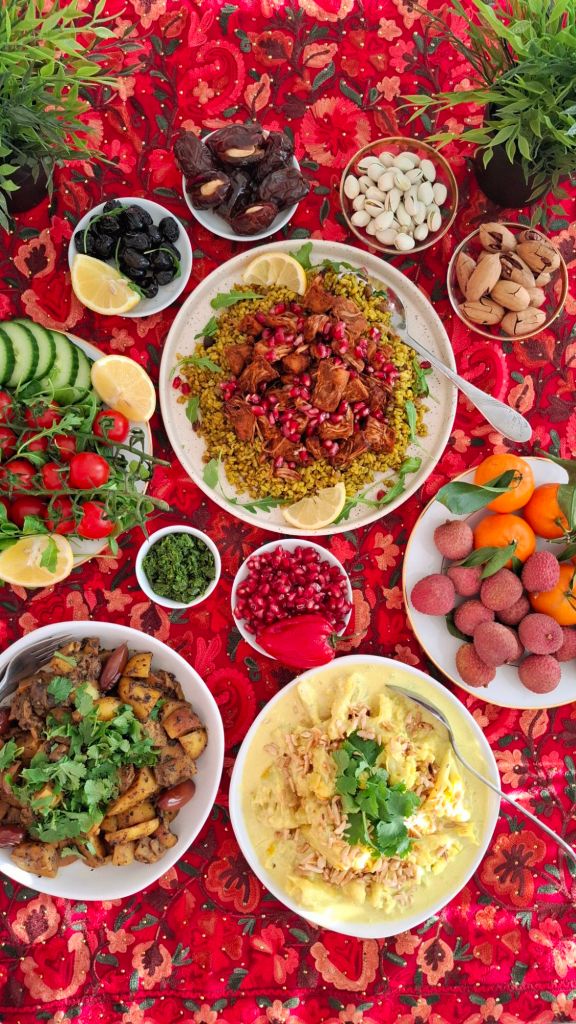
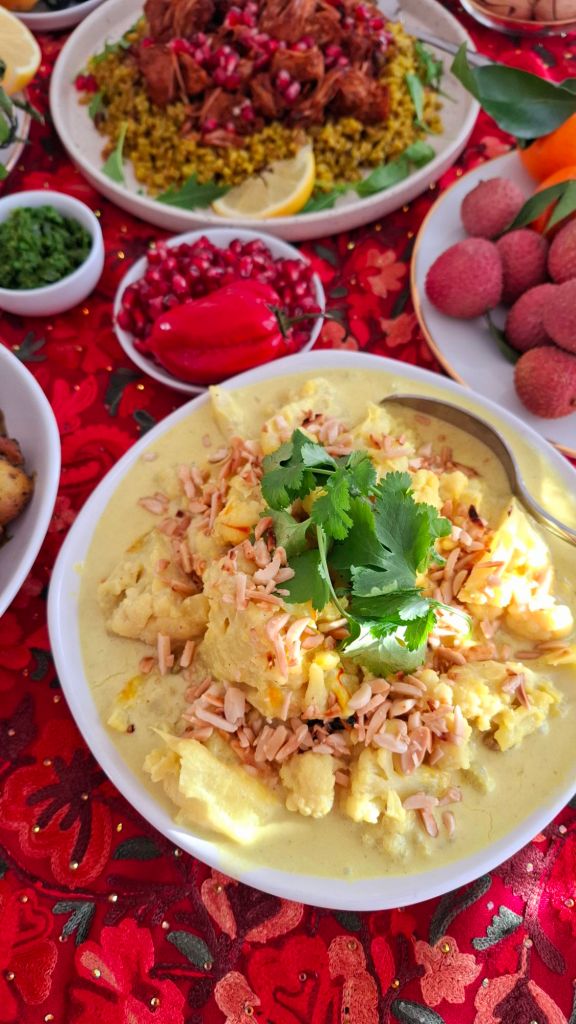
Saffron Cauliflower
If you want cauliflower to taste like a million bucks (but without breaking the bank of course), this is it. I cooked cauliflower in a luscious coconut milk infused with saffron and cardamom—a spice pairing commonly seen in Emirati cooking. I began by lightly seasoning and roasting the cauliflower, then finished it off in the aromatic coconut milk that felt like expensive silk on my tastebuds. Toasted slivered almonds added texture, but cashews would also work beautifully (cashews and cauliflower are a match made in heaven). If you’ve only ever roasted cauliflower heads or “steaks,” give this a try—it’s time to change things up from the Instagram repetitive cauli-craze (steaks and wings, I’m looking at you). If you can, soak your saffron strands in a small volume of cold water in a jar, and in the fridge the day prior. Then add that liquid in the coconut milk, soaking the strands overnight helps to extract maximum flavour.
Garlicky Black Lime Potatoes with Dates
This dish was the surprise hit of the session! Black lime added its unmistakable tangy depth that contrasted beautifully with the creamy, melt-in-your-mouth potatoes and the natural sweetness of dates. It gave sweet and sour with a Middle Eastern vibe. The end result was reminiscent of Greek lemon potatoes but with the unique handsome mystique you can only get from Black Limes. If you haven’t cooked with black lime yet, I urge you to try—it brings a whole new perspective to your cooking. Of note, black limes are a specific variety of salt brined limes, then left to dry under the sun. Once they are fully dried, you can use them whole or ground into a powder.
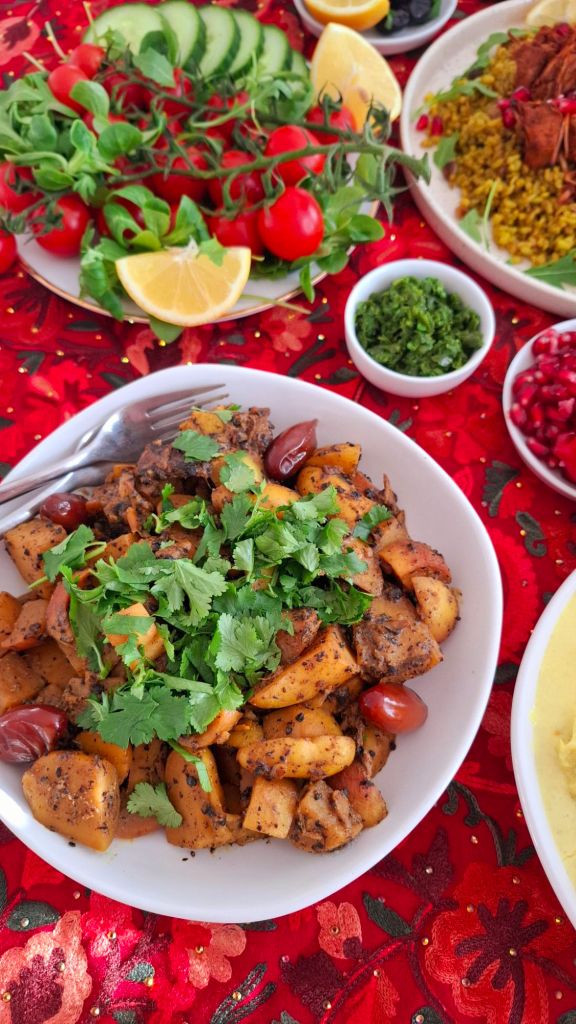
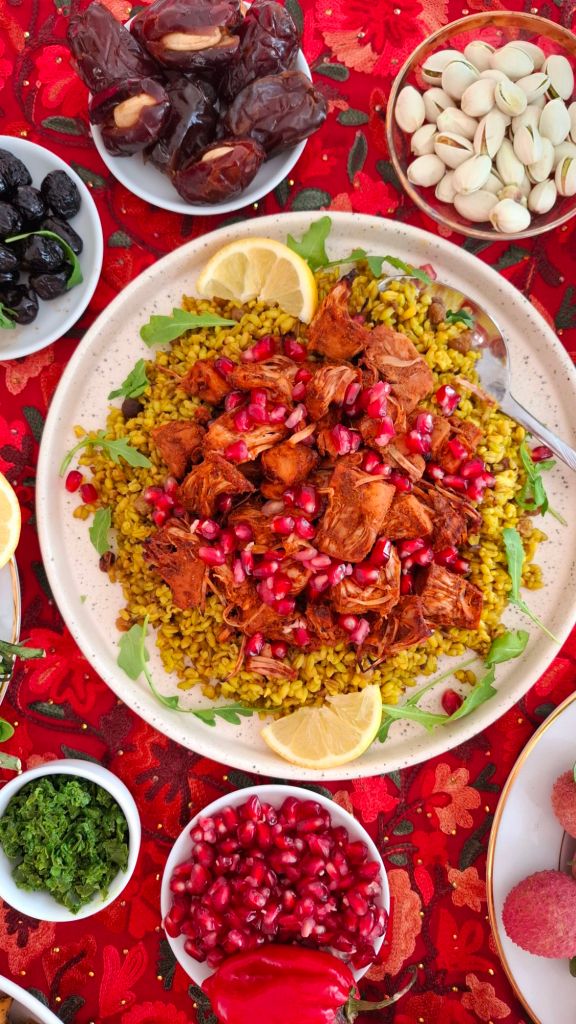
Cardamom-Turmeric Freekeh with Harissa Jackfruit
The centerpiece of the meal was a fragrant cardamom-turmeric freekeh studded with raisins, paired with fiery harissa-marinated young jackfruit. Freekeh, a nutty grain with a terrific bite to it, is one of my favorites. If you can find green freekeh (slightly less processed than regular), it’s worth the effort. It’s so flavorful that it can be enjoyed on its own simply cooked in water- you wouldn’t even have to add salt! In my opinion, it’s truly the tastiest of all grains!
For the jackfruit, I marinated it overnight in a homemade harissa rub sweetened with Yemeni honey I brought back from Dubai. The extra time to marinate made all the difference: always marinate young jackfruit overnight! I learned just how much of a difference it makes at my restaurant with our popular “Jerk Jack.”
Palate Cleansing Fresh Veggies, Spicy Kuwaiti Mabooch & Snacky Snacks
Traditionally, Middle Eastern meals often feature plates overflowing with fresh raw vegetables, bitter greens, and herbs rather than structured salads. For this meal, I included cucumbers, arugula, cherry tomatoes, and olives. I paired them with my current favorite condiment: Kuwaiti Mabooch. This green chili relish is elevated with garlic, ginger, cilantro, cumin, and mustard oil. It’s spicy, fragrant, and perfect dabbed on every other bite you take. As for the “snacky snacks”, those would be the dates, fruits and nuts. I find in Middle Eastern culture, family style meals are the norm: where all is spread out on a table at the same time. There isn’t always a first course, second course and then desert, served separately and at different stages. And that’s what I love about family style meals: the generosity, warmth and informality of it all. Everyone is different, so mix and match along the way as you please. And if you’re hungry, by all means possible: serve yourself again.
If you have any questions about the dishes above, leave a comment or send me an e-mail to thefoodcuriouslife@gmail.com
 FOOD CURIOUS
Leave a comment