In December 2024, I traveled to Dubai for a family trip. While this was my fourth visit—the last one being in 2008—I wasn’t quite sure what to expect this time around. Dubai often carries an inaccurate stereotype of being merely a city of superficial glitz and glamour.
But when you’re food curious (and, by extension, life curious), you understand the importance of experiencing a destination firsthand—with an open mind and without being swayed by loud external opinions.
While Dubai has continued to evolve with countless new buildings and attractions since my last visit, one thing remains unchanged: the presence of dates in the local culinary landscape.
It’s inevitable—everywhere you look, there’s a plate of dates piled high like a glorious pyramid or presented in an array of shapes and forms!


And as an absolute food and culture enthusiast, always in transit between the East and the West, I felt inspired to write a few words about this delectable sweet treat. In Dubai, dates are visibly an ancient food, while in the West, they have become something of an (often) overpriced superfood.
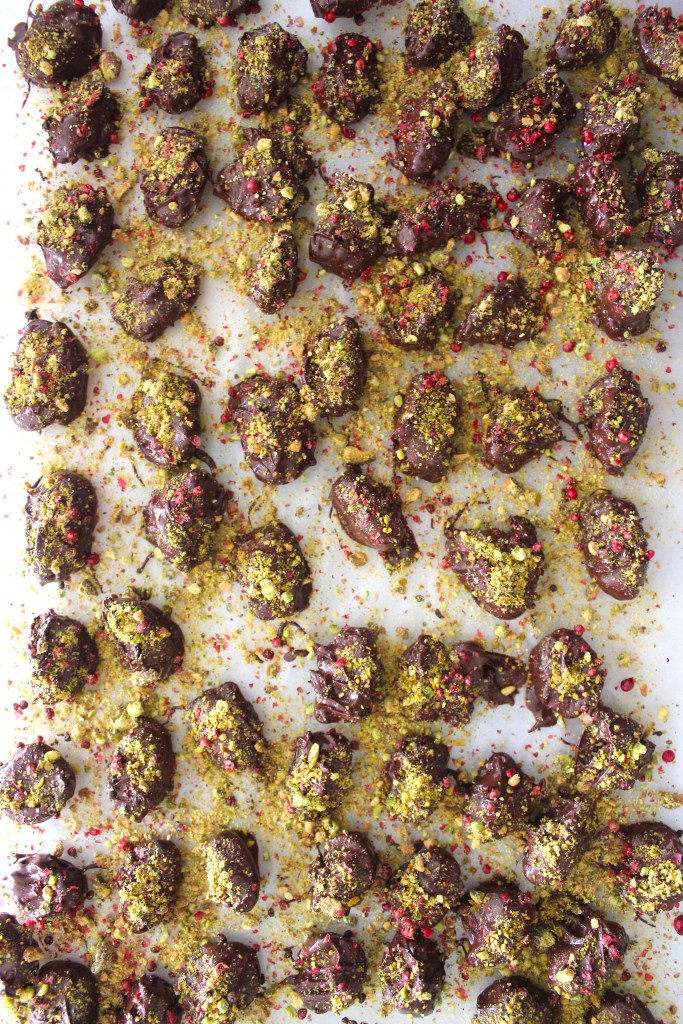
I also felt compelled to write about dates because they were an ingredient I was deeply fond of during my time running my restaurant in Jamaica. One thing my guests always appreciated was the chocolate-coated dates I’d make, each sprinkled with a touch of something special: from rose petals to zaatar to toasted grated coconut. In fact, chocolate-coated dates (and date caramels rolled in puffed amaranth) even made it into my first-ever self-published cookbook: Food Curious.
So let’s begin.
Dates have long been a cornerstone of Middle Eastern diets, playing an integral role in the culture, history, and even spiritual practices of the region. Their sweet, rich flavor and unique nutritional profile have made them a prized fruit for thousands of years. But in recent years, dates have found their place in the modern “superfood” conversation, particularly in the West. What once was a traditional desert staple is now a trending ingredient in health food stores and online recipes, widely touted for its health benefits.
Origins and Historical Significance of Dates
Dates have been cultivated for over 5,000 years, with evidence of their use in Mesopotamia, ancient Egypt, and the Arabian Peninsula. The date palm (Phoenix dactylifera) has been essential to desert communities due to its ability to thrive in harsh climates. In regions where water was scarce and other crops could not survive, the date palm was a life-sustaining resource. The fruit provided not only nutrition but also materials for construction, weaving, and even medicine.
In the United Arab Emirates (UAE)- where Dubai is located-, the date palm tree is an enduring symbol of resilience and prosperity, growing even in the arid desert. The fruit’s significance is reflected in its role in spiritual and cultural practices. During Ramadan, dates are used to break the fast, following the example of the Prophet Muhammad. In the Emirates, offering dates and Arabic coffee (qahwa) to guests is a time-honored tradition, symbolizing hospitality and respect.

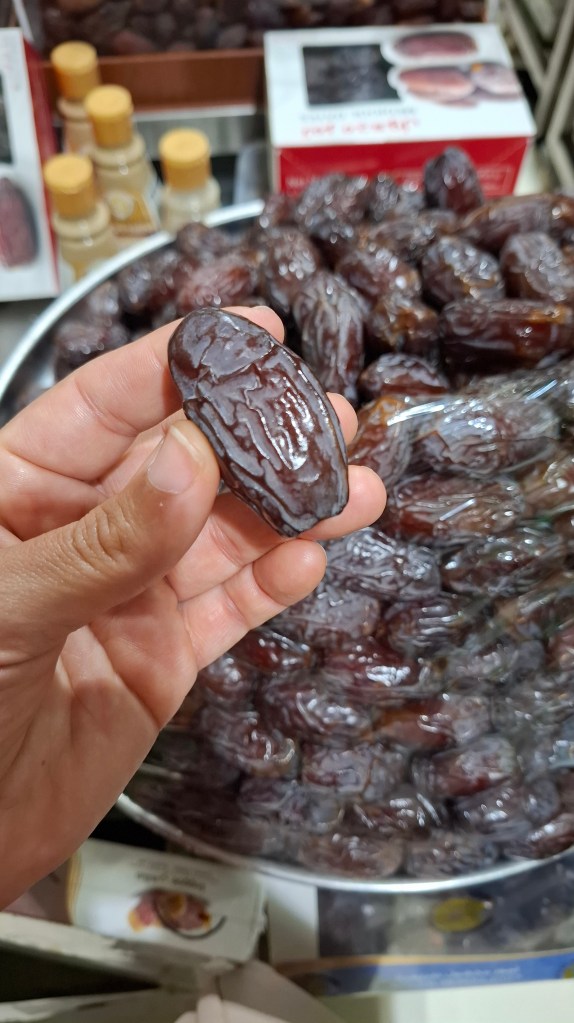
Above Right: dates at Bateel, a Saudi chain popular in Dubai that specializes in dates & coffee. Left: the infamous Medjool date, or what’s locally referred to as “Majdol”.
Dates and Their Role in Emirati Culture
In the United Arab Emirates (UAE), dates are more than just a fruit—they are a symbol of heritage and identity. The fruit is integral to many traditional dishes, such as Khabeesa (a sweet, sticky dessert) and Luqaimat (fried dough balls drizzled with date syrup). The UAE is one of the largest producers and exporters of dates globally, with over 200 varieties cultivated in the region. The date palm is not only a staple in the Emirati diet, but also an emblem of the nation’s connection to its history and landscape.
When I was in Dubai, just like in 2008, I marveled at the sheer variety of dates everywhere. From the malls to the supermarket shelves, from must-visit food experiences like Waterfront Dubai Market or Global Village, to the menu offerings of regional coffee shop chains—notably the Saudi chain Bateel—and the breakfast buffets of every hotel. Dates are omnipresent, day and night. They even make an appearance on the local currency, with the date palm tree proudly featured on the 5 AED bill.
The Rise of Dates as a Superfood in the West
While dates have been cherished in the Middle East for centuries, their status as a health food in the West is a more recent development. Over the past decade, the increasing trend toward natural sweeteners and plant-based diets has seen dates being marketed as a “superfood.” Their high fiber content, rich array of vitamins and minerals (including potassium, magnesium, and iron), and antioxidant properties have made them a sought-after ingredient in health-conscious kitchens.
In the West, dates are often seen as an alternative to refined sugars, used in energy bars, smoothies, and baking. They’re lauded for their natural sweetness and versatility, whether eaten on their own or blended into recipes as a healthier substitute for sugar. The fiber in dates helps regulate digestion, while their high antioxidant content supports overall health, making them a popular snack for those focused on fitness and wellness.
A Connection Between Past and Present
As dates transition from a traditional Middle Eastern food to a trendy superfood, they represent more than just a nutritional powerhouse—they are a living link between ancient agricultural practices and modern health trends. The growing popularity of dates in the West highlights a larger movement toward plant-based and whole-food diets, as well as a renewed interest in foods with deep historical roots.
However, the rise of dates as a superfood doesn’t diminish their cultural significance in the Middle East. In fact, it underscores the importance of preserving traditional foods that have nourished communities for centuries, while also embracing new ways to incorporate them into contemporary diets.
In the UAE, dates are a beloved fruit, and many varieties are popular with locals. The best-selling dates often come from local farms and from nearby countries, and the most well-known types include the ones listed below. It just takes popping into a local supermarket to explore the wide range of dates available:
Khalas Dates
Khalas dates are perhaps the most iconic and loved variety in the UAE. They are medium to large-sized dates with a sweet, caramel-like taste and soft, chewy texture. They are often considered the “golden standard” of dates in the region and are commonly consumed during Ramadan to break the fast.
Fardh Dates
Fardh dates are another popular variety in the UAE. They are medium-sized dates with a smooth texture and a rich, sweet flavor. Fardh dates are favored for their high quality and are often sold in premium packaging for gifting.
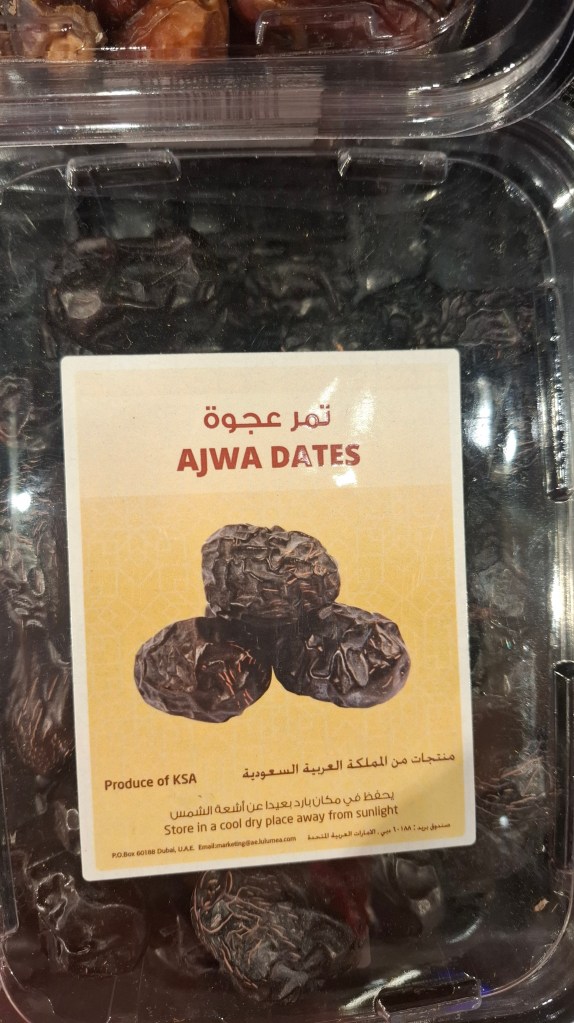

Ajwa Dates
Ajwa dates are a highly revered variety, especially in the Gulf region. These dates are known for their smaller size, dark color, and slightly chewy texture. Ajwa dates hold religious significance, as they are said to be favored by the Prophet Muhammad. They are considered a healthy and prestigious variety, often consumed for their nutritional value.
Sukkary Dates
Sukkary dates are known for their natural sweetness, which makes them a favorite for snacking. These dates are soft and very sweet, with a melt-in-the-mouth texture. Sukkary dates are typically sold as a premium variety and are often given as gifts during special occasions.
Barhi Dates
Barhi dates are soft, golden-yellow dates that are typically eaten when they are still in their fresh, non-dried stage. They have a rich, honey-like taste and a smooth texture. These dates are highly popular in the UAE, especially when they are in season.
Rutab Dates
Rutab dates are semi-dry, medium-sized dates that have a slightly chewy texture. They are sweet but less intense than other varieties, making them ideal for people who prefer a milder flavor.

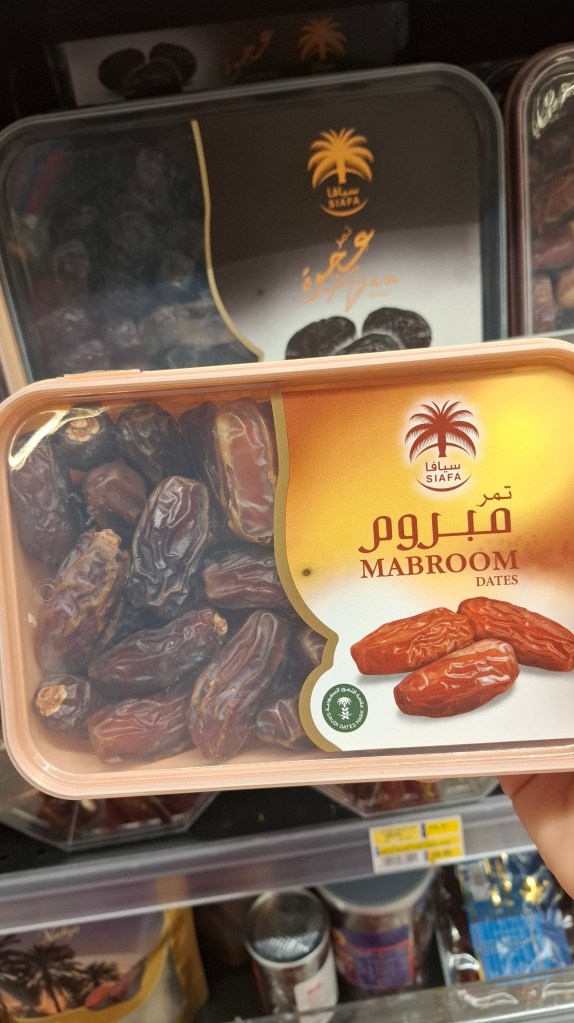
Mabroom Dates
Mabroom dates are medium to large in size and have a firm, chewy texture with a mildly sweet taste. They are considered a premium variety and are often sought after for their health benefits and long shelf life.
Khudri Dates
Khudri dates are dark brown with slightly wrinkled skin, offering a chewy texture and a moderately sweet, caramel-like flavor. Known for their rich taste and energy-boosting properties, they are a popular choice for snacking and desserts.
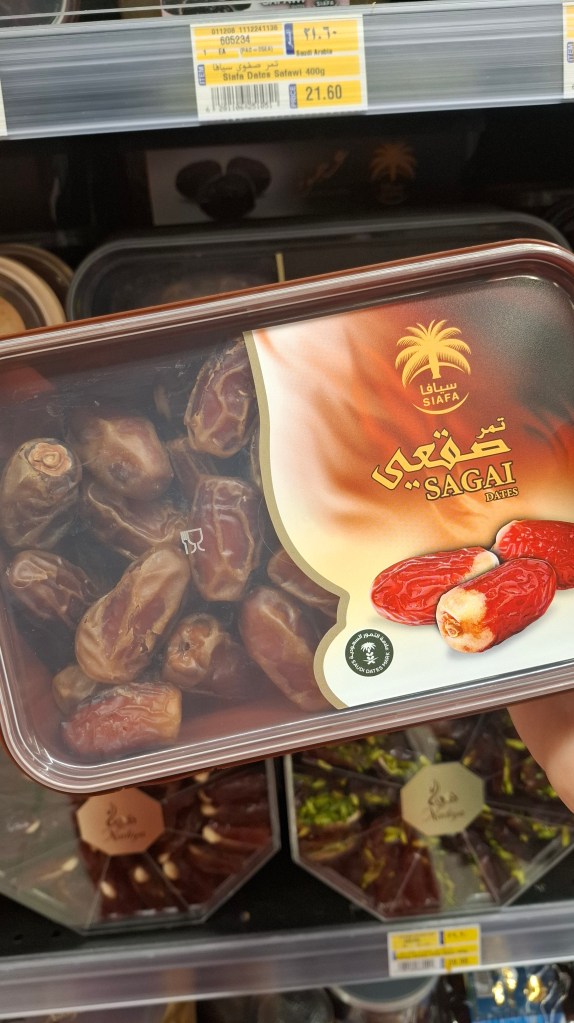
Sagai Dates
Sagai dates are known for their two-toned appearance, Sagai dates have a golden, firm base and a soft, brown tip. They offer a mildly sweet flavor with a satisfying chewy texture, making them a favorite in Saudi Arabia.
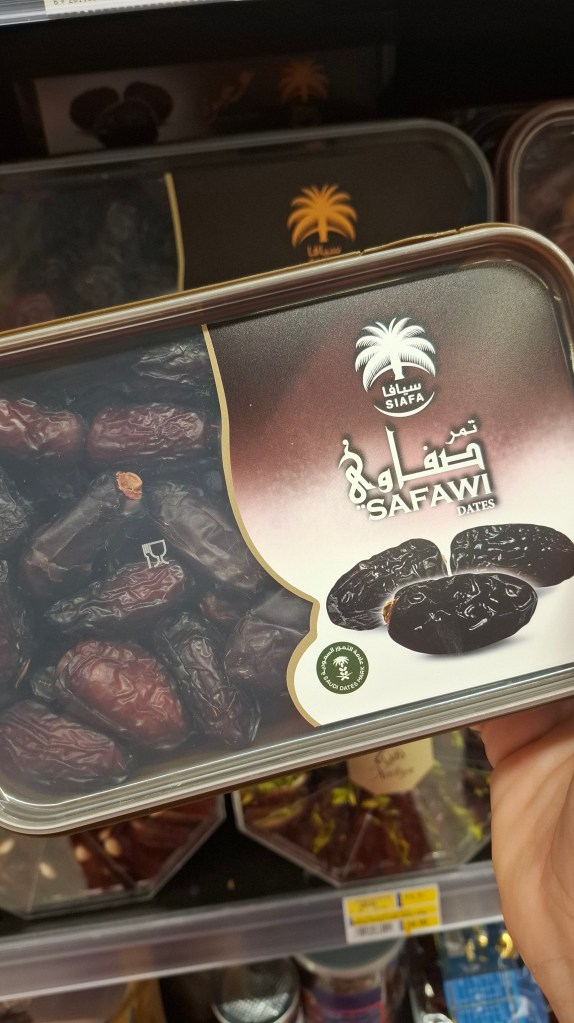
Safawi Dates
Safawi dates are dark, almost black dates are prized for their soft texture and rich, sweet flavor. Known for their high nutrient content, they are often consumed for their health benefits and natural energy boost.
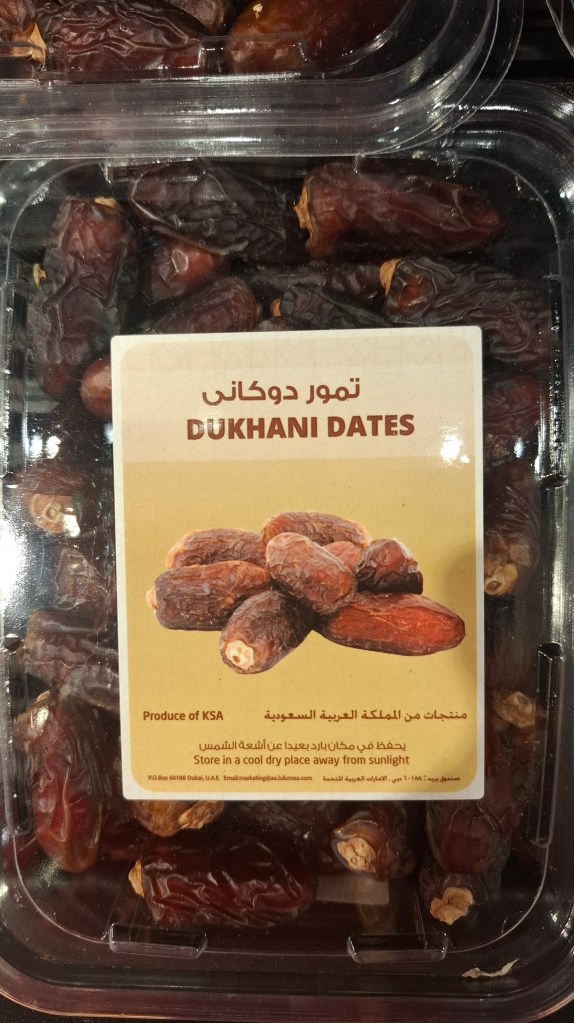
Dukhani Dates
Dukhani dates have a glossy, dark brown skin and tender, slightly sticky texture. They are known for their balanced sweetness and smooth, melt-in-the-mouth feel. They are enjoyed both as a snack and in desserts for their luxurious taste.
Other Popular Varieties
Khadrawy
Soft and moist, this variety is popular for its mild sweetness and smooth texture.
Shahrami
This variety is known for its rich taste and soft texture, often enjoyed for special occasions.
The many uses of dates:
What I especially found incredible while in Dubai was how the fruit itself is used in so many ways: both traditional and contemporary. But beyond that, the entire tree has been integral to desert life and Bedouin culture. There is a visibly deep, intimate knowledge surrounding the date palm tree in this part of the world.
And it continues to play an integral role in Emirati cuisine and culture. Beyond the familiar use of dates as a sweet treat or snack, there are countless ways that dates and their byproducts are incorporated into local food, beverages, and traditions. Here’s a breakdown of how dates and their parts feature in Emirati cuisine:
- Date Seed Coffee (Qahwa)
At Bateel, I got to experience date seed coffee, which is made by roasting and grinding date seeds to create a unique, caffeine-free coffee alternative. The flavor of date seed coffee is slightly nutty and earthy, making it a traditional drink enjoyed by many, particularly during the cooler months or as part of hospitality rituals. - Date Syrup (Dibs)
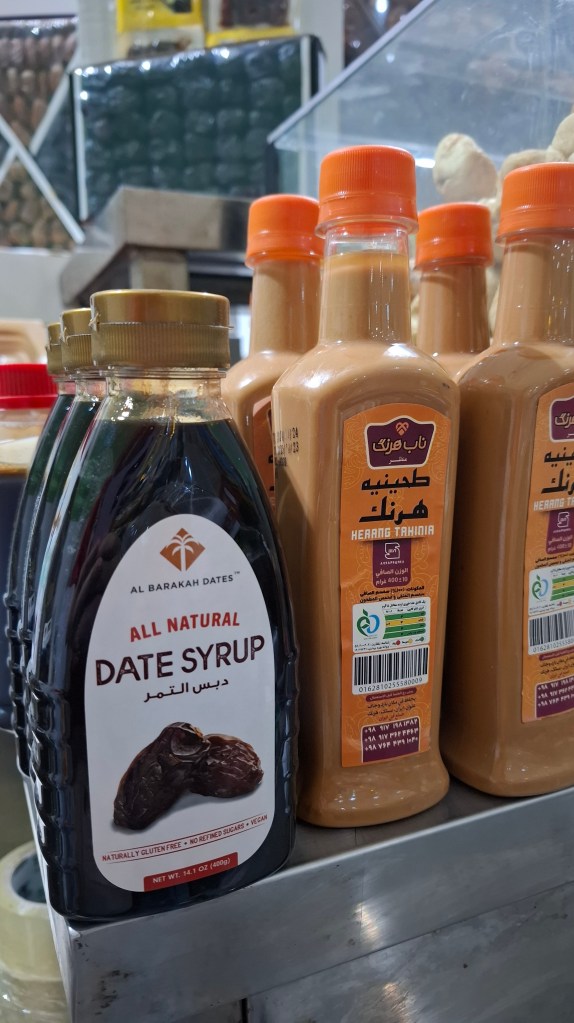
Dibs, or date syrup, is made from dates that are boiled down into a thick, sweet syrup. It’s used as a natural sweetener in many dishes, from breakfast porridges and pancakes to savory dishes and desserts. Dibs can also be drizzled over Arabic bread or added to smoothies and salads. - Dates in Sweets and Desserts
Dates are a key ingredient in many traditional Emirati desserts, thanks to their natural sweetness. Some examples include:
Khanfaroosh: A date-filled fritter, often enjoyed with tea or coffee.
Luqaimaat: Fried dough balls drizzled with date syrup or filled with dates.
Ma’amoul: A shortbread-style cookie, often filled with dates, nuts, or figs, and served during holidays and celebrations.
- Dates in Savory Dishes
Dates are sometimes used in savory dishes, providing a balance to rich and spicy flavors. Examples include:
Kabsa: A rice dish that might feature dates for added sweetness, paired with meat (often lamb or chicken), vegetables, and spices.
Machboos: A spiced rice dish, similar to Kabsa, in which dates are occasionally used to balance the flavors of the spices.
Below left: Date Milk, commonly found at most supermerkets. Right: Luqaimat, finished with a drizzle of date syrup
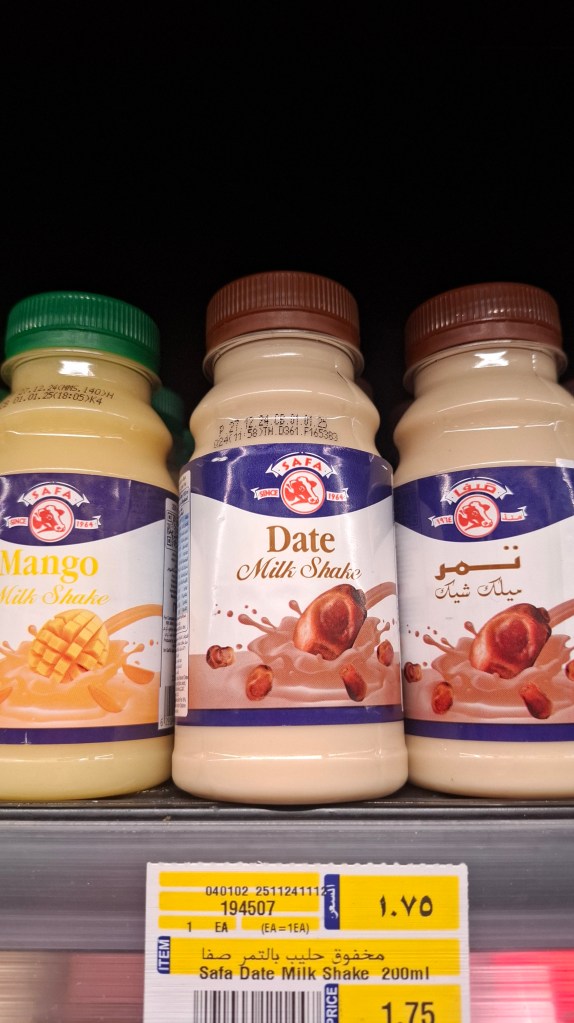

- Date-Infused Milk (Laban Dates)
A traditional drink in Emirati culture is Laban with Dates—a combination of yogurt-based drink (laban) and finely chopped dates. It’s often consumed during the hot months for its refreshing qualities and energy-boosting properties. - Date Palms and Leaves in Traditional Cooking
Beyond the fruit itself, other parts of the date palm tree are also used in Emirati cuisine and culture:
Date Palm Leaves: These leaves are used for making traditional baskets (for food and storage), mats, and other handicrafts, which are often part of the Emirati lifestyle.
Date Palm Trunk: The trunk of the date palm is sometimes used for barbecue skewers and furniture. While it’s not directly used in food, the wood has a deep connection to local culture.
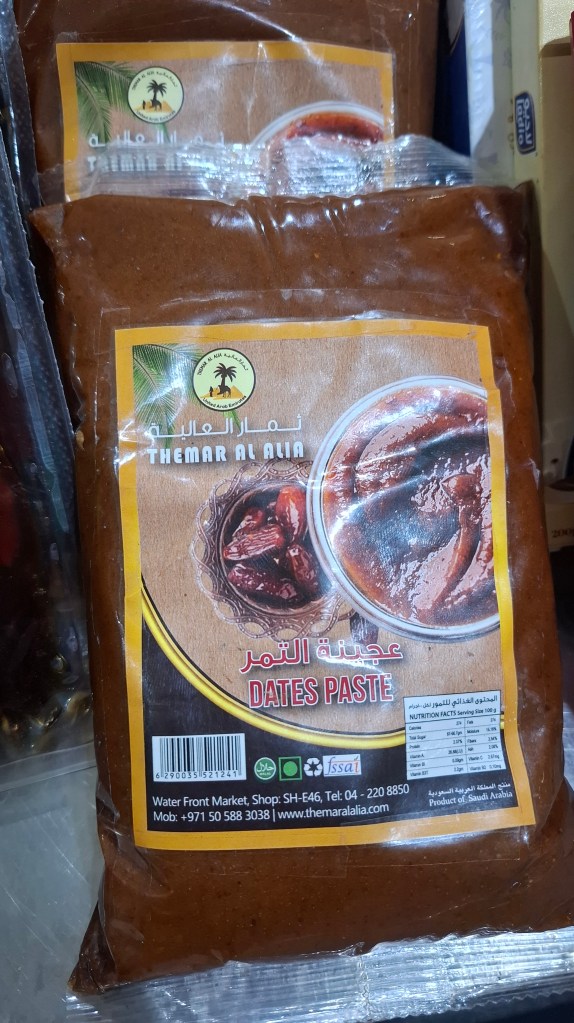
- Date Paste
Date paste is another popular product used in dishes like desserts, energy bars, or snack foods. It’s sometimes combined with spices like cinnamon or cardamom to create a rich filling for baked goods or served alongside cheese or yogurt for a snack. - Date Palm Vinegar
Date vinegar is a type of vinegar made from fermented date juice, which can be used as a tangy ingredient in salads and dressings. It’s a traditional product that has also gained popularity in modern kitchens for its unique flavor. - Date Jams and Preserves
Locally, you can find date jams or preserves, which are made by simmering dates with sugar and spices to create a spreadable treat, often served with bread, pancakes, or porridge for breakfast. - Dates in Hospitality and Rituals
Dates are a significant part of Emirati hospitality. They are often served to guests alongside Arabic coffee (Qahwa) as a sign of respect and welcome. It’s common to offer dates at social gatherings, weddings, and religious celebrations, including during Ramadan for Iftar (the meal that breaks the fast). - Date Drinks
Dates with milk or dates blended into smoothies are often consumed for breakfast or as a health snack. The mix of dates with milk creates a natural, nourishing energy drink
- Date-Based Energy Snacks
Dates, particularly in combination with nuts or oats, are often used in energy bars or homemade snack balls, providing a natural, nutrient-packed treat. The sugars in dates offer quick energy, while their fiber and minerals make them a balanced snack. - Date-Infused Olive Oil (Sajee)
Some Emiratis use a blend of dates and olive oil as a part of their culinary preparations, creating a rich mixture for cooking or as a dressing for salads. - Dates as a Natural Sweetener in Tea
Dates are sometimes added to traditional herbal teas (such as chamomile or sage tea) to enhance the sweetness without using sugar. This practice has roots in both Emirati and Bedouin culinary traditions.
As you can see, dates and all parts of the tree play a multifaceted role in the UAE’s food culture, from traditional drinks and sweets to savory dishes and even products like vinegar and coffee. The UAE’s love for dates ties deeply into its heritage and daily life, making it not only an essential part of cuisine but also a symbol of generosity and hospitality.
Below left: date syrup, a common sight in Dubai and left, date paste: used in various desserts and sweet treats.
How dates inspire me
Dates have always played a big role in my life- while I am not from Dubai myself, my Levantine Middle Eastern heritage also celebrates dates, but to a lesser degree than Emiratis themselves.
Of course, there are the chocolate coated dates I especially used to make at the Kitchen, merging my love for dates, chocolates & spices. I always enjoyed seeing what accent made chocolate dates that much more interesting: zaatar, chili pepper flakes, sumac, etc.


I love incorporating dates into both sweet and savory dishes. One of my favorite combinations is chopping dates and mixing them with Kalamata olives, sun-dried tomatoes, walnuts, zaatar, and rose petals, then letting them marinate in olive oil. This multi-dimensional garnish is perfect on salads, hummus, or pizza. Lightly scattered over pizza just after it comes out of the oven, it adds a burst of flavor, and it’s equally great on a zucchini focaccia.
For another sweet-savory profile, I combine dates with crispy curry leaves, toasted cashews, and grated coconut, then spread it over roasted vegetables. It’s a delightful contrast of textures and flavors.
Dates also shine in rice and couscous dishes, where their natural sweetness pairs beautifully with the savory elements.
And, of course, dates are a no-brainer in desserts. I love adding little bites to chocolate chip-cardamom cookies or using them in a date cake with whipped tahini cream—both are absolutely irresistible!
Dates are here to stay as their versatility really opens a world of ideas. From ancient deserts to the bustling health food aisles of the West, dates have undergone a remarkable transformation. They remain a vital part of Middle Eastern culture, with deep ties to history and spirituality. At the same time, their nutritional value and versatility have earned them a prominent place in the modern conversation around healthy eating. Whether enjoyed in a traditional setting in the Emirates or used as a sweetener in Western recipes, dates continue to nourish, connect, and inspire people around the world.

 FOOD CURIOUS
Leave a comment